The plant that taught me about drought tolerance is still alive, which is more than I can say for the watering routine I had at the time. It was a ZZ plant, bought on impulse, put in a corner I walked past but rarely stopped at, and watered — I worked this out later — roughly once every six weeks. Sometimes less. It didn't just survive that treatment. It grew. Slowly, stubbornly, it pushed out new stems while the fern two shelves over was crisping itself to death over a single missed weekend.
That ZZ plant is the reason I now think of drought tolerance as a design feature, not a consolation prize. Some plants are built to store water — in thick leaves, in swollen stems, in underground rhizomes — and that storage buys you time. Time between waterings, time away on holiday, time to be a imperfect plant owner and still have green things in your home.
This guide covers the eight most forgiving houseplants I grow, with honest numbers on how long each can go without water, what they store it in, and the one mistake that kills them all.
What makes a plant drought-tolerant
Every plant on this list shares one trait: it stores water somewhere in its own body, and it loses water slowly. The storage takes three main forms, and knowing which one your plant uses tells you how it behaves.
Thick, fleshy leaves are the most visible storage. Snake plants, jade plants, and aloe all hold water in their leaves — you can feel it when you squeeze a healthy leaf gently, firm and plump. When the plant needs water, it draws on those reserves, and the leaves slowly thin and wrinkle. A wrinkled succulent leaf is a fuel gauge: it tells you the tank is getting low, long before the plant is in danger.
Underground rhizomes are the hidden version. A ZZ plant's thick, potato-like rhizomes sit under the soil and hold enough water to keep the plant going for months. University of Florida IFAS researchers found that ZZ plants can survive three to four months without being watered at all, thanks to those rhizomes combined with waxy leaflets that lose very little water through transpiration. You can't see the reserves, which is why people overwater ZZ plants — the plant looks like it should need more than it does.
A swollen trunk or caudex is the third type. Ponytail palms store water in the bulbous base of their trunk, which visibly swells after watering and slowly shrinks as the plant uses the reserve. It's the most honest fuel gauge of the three — you can see the tank level.
The other half of drought tolerance is losing water slowly. Waxy leaf coatings, small leaf surfaces, and slow growth all reduce transpiration — the water a plant loses through its leaves. A ZZ plant's glossy leaflets and a snake plant's thick, upright leaves both lose far less water than a fern's fine fronds. Slow growth helps too: a plant that grows slowly simply needs less water, because it's building less new tissue.
The forgiveness table
Here's the honest comparison — how long each plant can go without water in normal indoor conditions, based on my own experience and what extension sources report. These are "won't notice" windows, not survival limits; every plant here can survive longer than the number shown, but beyond it you'll start seeing stress.
| Plant | Water storage | Comfortable gap | Light | The catch |
|---|---|---|---|---|
| ZZ plant | Rhizomes | 4–6 weeks (UF/IFAS: survives 3–4 months) | Low to bright indirect | Rots fast in wet soil; toxic to pets |
| Snake plant | Thick leaves + rhizomes | 4–6 weeks | Low to bright indirect | Rots if watered weekly; toxic to pets |
| Ponytail palm | Swollen trunk base | 3–4 weeks | Bright indirect to some sun | Needs bright light; slow to forgive overwatering |
| Jade plant | Thick leaves + stems | 3–4 weeks | Bright light, some direct sun | Drops leaves if overwatered; toxic to pets |
| Aloe vera | Thick gel-filled leaves | 3–4 weeks | Bright light, some direct sun | Sunburns if moved into direct sun too fast |
| Cast iron plant | Rhizomes | 2–3 weeks | Low to medium | Slow growing; hates direct sun |
| Pothos | Stems + leaves (modest) | 2–3 weeks | Low to bright indirect | Wilts dramatically but recovers fast |
| Christmas cactus | Flattened stems | 2–3 weeks | Bright indirect | Needs more water when budding; drops buds if too dry |
A note on those numbers: they're for established plants in pots that fit them, in ordinary room temperatures. A plant in a tiny pot in a hot, sunny room will dry out faster. A plant in a big pot in a cool room will last longer. And winter stretches every number — most of these plants need roughly half as much water in winter as in summer, because they're barely growing.
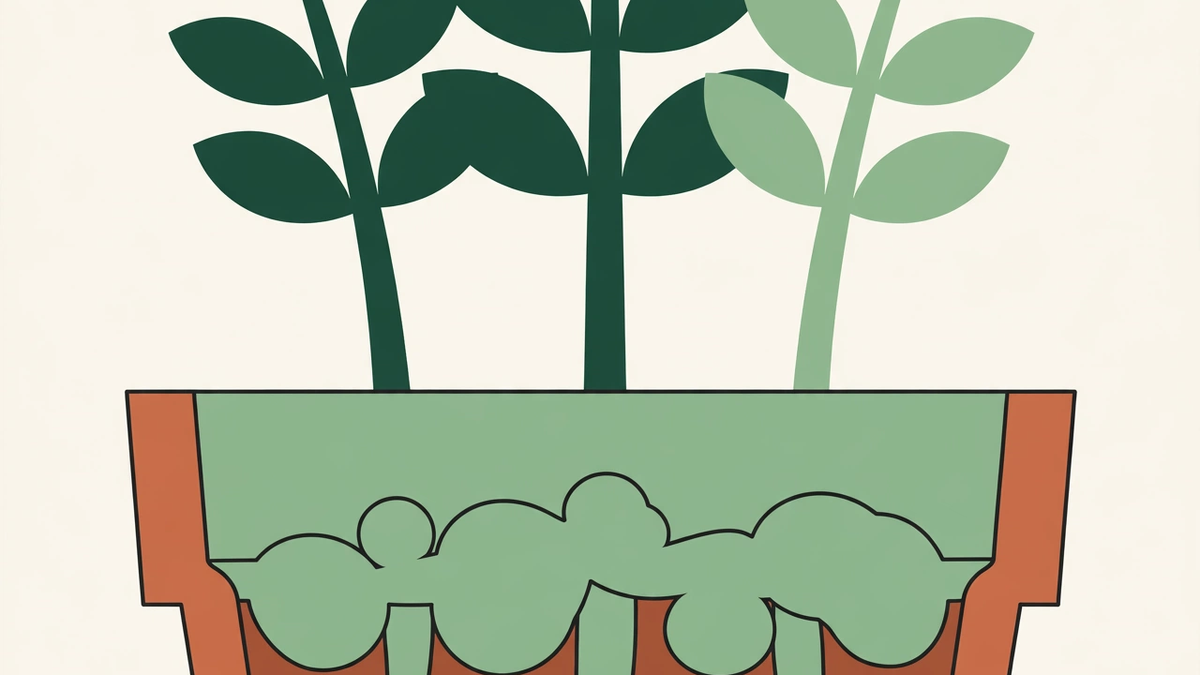
The eight plants, in detail
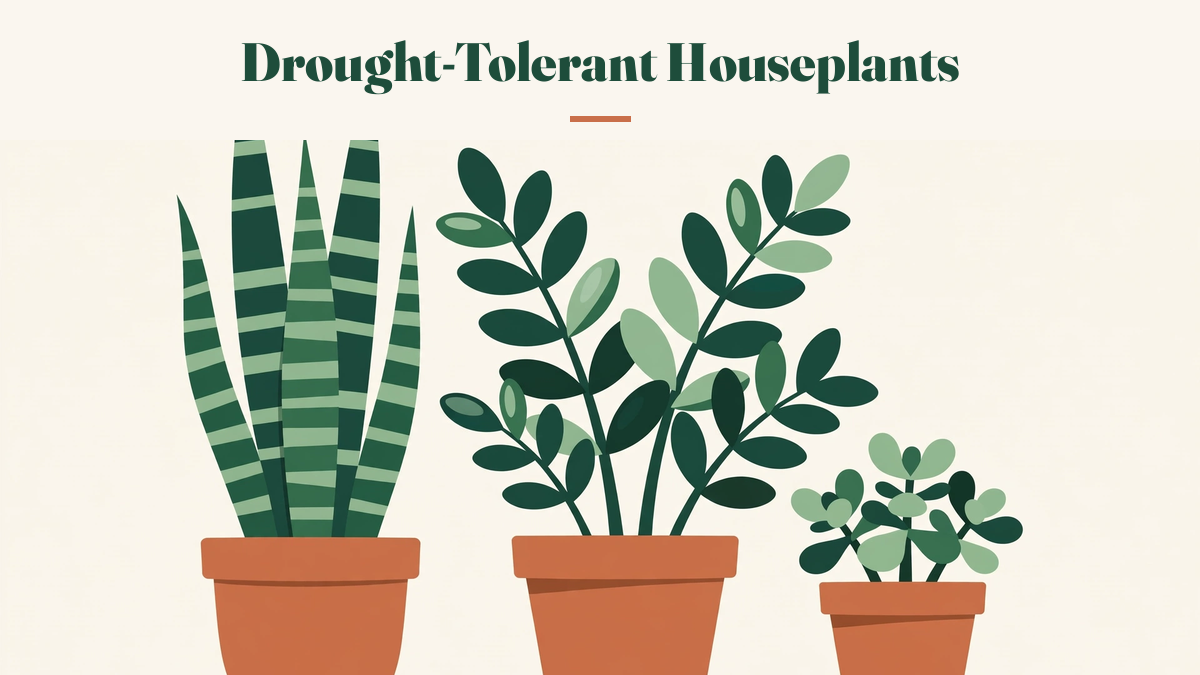
ZZ plant (Zamioculcas zamiifolia). The toughest plant on this list, and the one I'd recommend first to anyone who travels or forgets. Its rhizomes store months of water, it tolerates very low light — UF/IFAS found it producing new leaves under just 25 foot-candles of light for over a year — and it has almost no pest problems. The only reliable way to kill it is overwatering: wet soil rots the rhizomes, and by the time the stems go yellow and flop, it's often too late. Water it when the soil is dry all the way through, roughly once a month, and leave it alone otherwise. For the full guide, see ZZ plant care.
Snake plant (Dracaena trifasciata, still sold as Sansevieria). The classic. Thick, upright leaves store water, and the plant tolerates low light, dry air, and neglect that would finish most houseplants. Penn State Extension notes you can miss snake-plant waterings for a month or so and the plant will be no worse for wear, provided drainage is good. My own snake plants get watered about once a month in summer and every six to eight weeks in winter. The killer is the same as the ZZ: wet soil. Water it weekly and it rots from the base. Snake plant care has the full story.
Ponytail palm (Beaucarnea recurvata). Not a palm at all, but a desert plant with a swollen trunk base that stores water like a camel's hump. It wants bright light — more than the ZZ or snake plant — and it sulks in dim rooms. But give it a bright windowsill and it will forgive weeks of drought without a complaint. The trunk visibly shrinks as it uses its reserves, which makes it the easiest plant on this list to read: plump trunk, leave it alone; wrinkled trunk, water it.
Jade plant (Crassula ovata). A succulent that grows into a small tree over years, with thick leaves and a woody stem. It wants bright light and a full dry-down between waterings. The leaves tell you when it's thirsty — they go slightly soft and wrinkled — and it recovers fast from drought. What it doesn't recover from is overwatering: the leaves drop, the stem goes soft, and the plant collapses.
Aloe vera. The most useful plant on the list, and one of the most forgiving. Its gel-filled leaves hold weeks of water, and it thrives on neglect in a bright spot. The mistake people make is moving it into harsh direct sun too quickly — aloe sunburns, turning brown and shrivelled — or watering it on a schedule meant for tropical plants. Treat it like the desert plant it is: bright light, infrequent deep waterings, and soil that drains fast.
Cast iron plant (Aspidistra elatior). The name is the promise. It tolerates low light, dry air, irregular watering, and general indifference better than almost anything. It's slow — painfully slow, sometimes a single new leaf a year — but that slowness is part of the tolerance. It needs less of everything because it does less. If you have a dark corner and a poor memory, this is your plant.
Pothos (Epipremnum aureum). The least drought-tolerant plant on this list, but it earns its place because of how it behaves when it does dry out: it wilts dramatically, looks half-dead, and then recovers within hours of watering. That visible signal makes it forgiving in a different way — it tells you clearly when it needs water, and it bounces back from the occasional lapse. A pothos can go two to three weeks without water in a cool room, and it will let you know when it's had enough.
Christmas cactus (Schlumbergera). A surprise entry, but a genuine one. Unlike desert cacti, it's a forest cactus — but its flattened stems still store water, and it copes well with irregular watering for most of the year. The exception is budding season in autumn, when it needs steady moisture or it drops its buds. Outside that window, it's as forgiving as any plant here.
How to set them up so they forgive you
Drought tolerance isn't just about the plant — it's about the setup. The same ZZ plant in the wrong pot and soil will rot in a month, while in the right setup it will go six weeks without a thought. Four things matter:
Drainage holes are non-negotiable. Every plant on this list needs a pot with drainage holes and a saucer you empty after watering. Without drainage, water pools at the bottom and the roots sit in it. That kills a snake plant faster than any drought ever will. If you love a pot without holes, use it as a decorative outer pot and keep the plant in a plastic nursery pot inside.
Use fast-draining soil. Standard potting mix holds too much water for most of these plants. I mix roughly two parts potting mix to one part perlite for ZZ plants and snake plants, and add coarse sand or fine gravel for jade and aloe. The soil should feel gritty and fall apart in your hand, not clump into a wet ball. Perlite, peat, and bark explains what each ingredient does and how to mix your own.
Pot size matters more than you'd think. A small plant in a big pot sits in wet soil for weeks because there aren't enough roots to drink the water. A drought-tolerant plant in an oversized pot is a rot risk, not a kindness. Choose a pot just 3–5 cm wider than the root ball, and repot only when the plant genuinely outgrows it.
Water deeply, then wait. When you do water, water thoroughly — soak the soil until water runs out of the drainage holes, then let it drain fully. A deep soak followed by a long dry period is what these plants evolved for. Little sips every few days keep the top wet and the roots dry, which is the worst of both worlds.
The one thing that kills them all
If there's a single sentence that explains most drought-tolerant plant deaths, it's this: they die of kindness. The owner waters on a schedule meant for tropical plants — once a week, every week — and the plant's water-storing tissues slowly rot. The symptoms look like underwatering, which makes it worse: the leaves go yellow and soft, the owner waters more, and the rot accelerates.
The signs of overwatering in these plants are specific. A snake plant's leaves go soft and mushy at the base, and you can pull them out with almost no resistance. A ZZ plant's stems turn yellow and flop over. A jade plant drops plump, healthy-looking leaves for no apparent reason. In all three cases, the soil will be damp — that's the tell. If the soil is wet and the plant looks thirsty, the roots are damaged and can't take up water. Watering more makes it worse.
If you catch it early, the fix is to unpot the plant, trim away any black or mushy roots and leaves, let the healthy parts dry out for a day or two, and repot into dry, fast-draining mix. Don't water for at least a week. Most of these plants will recover if the rot hasn't reached the main stem or rhizome. The full rescue process is in root rot: how to spot it, save the plant, and prevent it.
The habit that prevents all of this is simple: check the soil before you water, every time. Push a finger into the mix. For these plants, the mix should be dry most of the way down — not just at the surface. If you're unsure, wait another week. A drought-tolerant plant will always forgive a late watering. It will not forgive an early one.
Which one should you buy first?
If you're starting from scratch and you want one plant that will survive whatever your schedule does to it, buy a ZZ plant. It's the most forgiving plant I own, it tolerates the widest range of light, and it looks good doing nothing. If you want something taller and more architectural, a snake plant is the better pick. If you have a bright windowsill and want something with a bit more character, a ponytail palm or a jade plant will reward you for years.
And if you already own one of these plants and it's struggling, the answer is almost always the same: less water, better drainage, and patience. These plants are built to survive your worst weeks. Give them the setup they need, and they'll do the rest.
Frequently asked questions
What is the most drought-tolerant houseplant?
The ZZ plant is the toughest: University of Florida research found it can survive three to four months without water, thanks to thick rhizomes that store moisture. Snake plants and ponytail palms are close behind.
How long can a snake plant go without water?
A healthy snake plant in a pot with drainage can go four to six weeks without water indoors, longer in winter. Penn State Extension notes you can miss waterings for a month or so and the plant will be no worse for wear.
Do drought-tolerant plants need less light too?
Many of them tolerate low light as well — ZZ plants, snake plants, and cast iron plants all cope with dim rooms. But they still grow faster and look better with bright indirect light.
Can you overwater a drought-tolerant plant?
Easily — it is the main way they die. Their water-storing tissues rot in constantly wet soil. Always let the soil dry out fully between waterings, and use a pot with drainage holes.
Are drought-tolerant houseplants safe for pets?
Many are not. Snake plants, ZZ plants, and jade plants are all toxic if chewed by cats or dogs. Check the ASPCA list before placing one where a pet can reach it.
If you remember one thing… drought-tolerant plants die of kindness, not neglect — water deeply, then wait until the soil is dry all the way through.