Every home has a dark spot. Mine was a hallway with no window at all, plus a north-facing spare room that got a thin wash of grey light for a few hours a day. For years I treated those rooms as plant-free zones — until I started testing which plants could actually cope there, and discovered that the answer was more interesting than I'd expected.
Some plants genuinely thrive in low light. Some tolerate it and grow slowly. And some — the ones that appear on every "low light plants" list on the internet — quietly decline over six months and die, because "low light" on a care label means something very different from "low light" in a real dark room.
This guide is honest about that distinction. The plants below are ones I've actually grown in dim spots, not ones I've copied from a list. I'll tell you which ones thrive, which ones merely survive, and which popular picks to avoid — plus how to make a dark room work harder for the plants in it.
First, what "low light" actually means
Before choosing plants, it helps to know how dark your dark room really is. "Low light" gets used to describe everything from a bright north-facing room to a windowless bathroom, and the plants that cope in one won't cope in the other.
The shadow test is the quickest way to judge. At midday, hold your hand about 30 cm above where the plant would sit and look at the shadow it casts on a piece of white paper.
| What you see | Light level | What it means for plants |
|---|---|---|
| Sharp, well-defined shadow | Bright indirect | Most houseplants thrive here |
| Soft, fuzzy shadow with clear edges | Medium | Most houseplants grow well, some more slowly |
| Faint, blurry shadow — you can barely see it | Low | Only true low-light plants cope; growth is slow |
| No shadow at all | Very low | No plant thrives here long-term without a grow light |
Distance matters more than people think. Light falls off fast as you move away from a window — a plant two metres from a window gets far less light than one sitting on the sill, even though the room feels the same brightness to your eyes. As a rough guide:
| Spot | Typical light level |
|---|---|
| On a north-facing windowsill | Medium to low |
| 1 metre from a north window | Low |
| 2–3 metres from any window | Low to very low |
| A room with only a small north window | Low |
| A hallway with borrowed light from another room | Very low |
| A windowless room | No natural light — grow light needed |
If you're unsure about your own rooms, spend a day noticing where the shadows fall. The guide to how much light indoor plants really need goes deeper into measuring light and what different plants actually need.
Light changes with the seasons, too. A room that's medium light in June can be low light in December, when the sun is lower, the days are shorter, and the sky is greyer. I re-check my dimmest rooms every autumn — a plant that thrived on a shelf all summer may need moving closer to the window for winter. The shadow test takes ten seconds and it's worth repeating twice a year, once in midsummer and once in midwinter, so you know what your rooms really offer.
The honest truth about low light. No plant prefers low light. The plants in this guide are survivors, not enthusiasts — they tolerate dim conditions because they evolved on forest floors under dense canopy, where light is scarce and competition is fierce. In low light they grow slowly, produce smaller leaves, and may never flower. That's not failure; it's the deal. If you want fast growth and big leaves, you'll need more light — either a brighter spot or a grow light. What low-light plants give you is green life in rooms where most plants would die, and that's worth a lot.
Tier 1: plants that genuinely cope with low light
These are the plants I'd trust in a genuinely dim room — the ones I've grown in low light for years without drama. They won't grow fast, but they stay healthy and look good.
Snake plant (Sansevieria / Dracaena trifasciata)
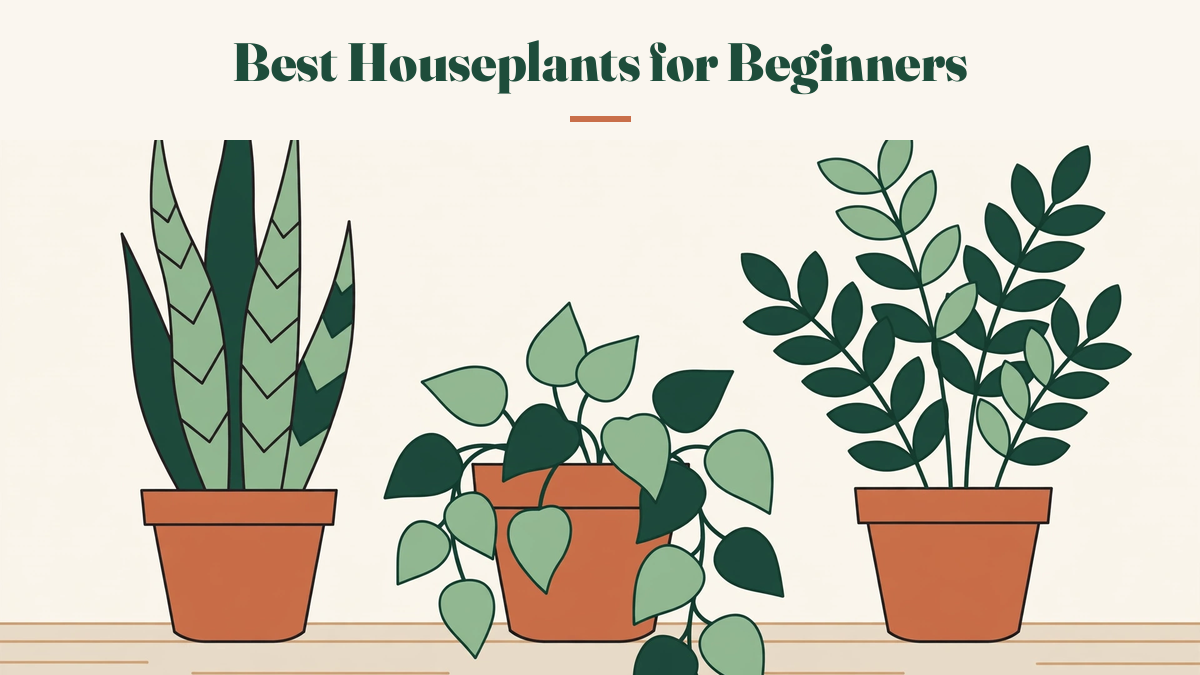
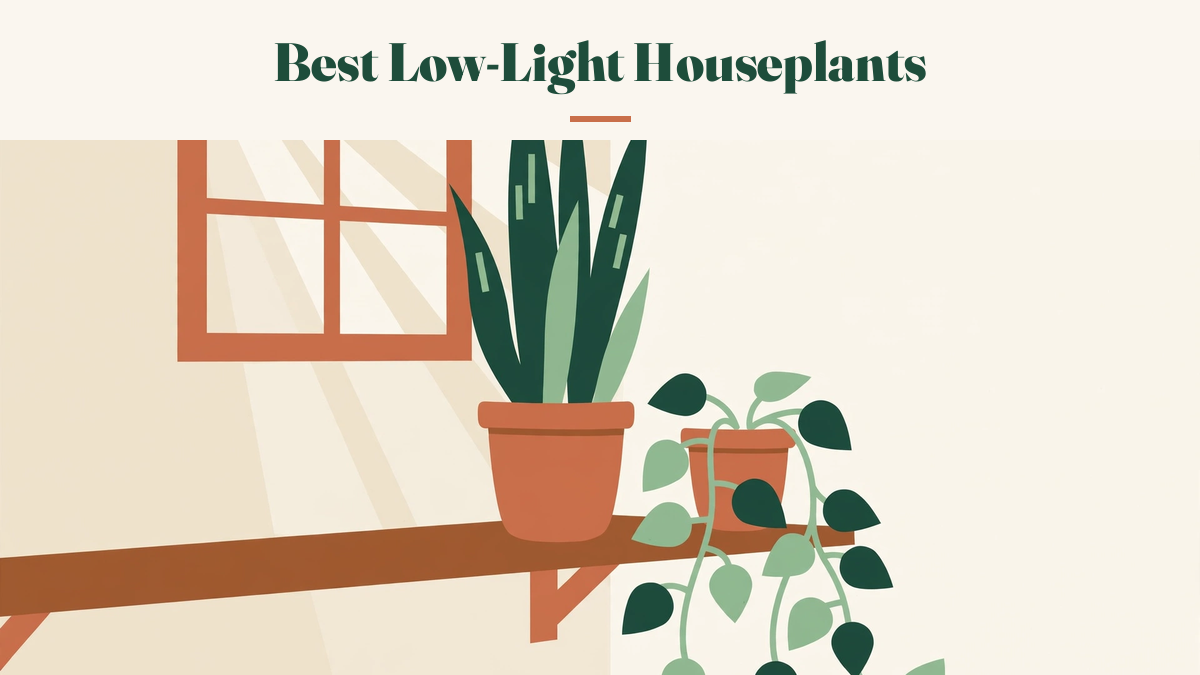
The toughest houseplant I know. Snake plants tolerate low light, irregular watering, dry air, and general neglect — which is why they're in every office and hotel lobby. In low light they grow very slowly (a new leaf every few months), but they stay upright, green, and architectural. Water sparingly — every three to four weeks in low light, and less in winter. Overwatering is the one thing that kills them. The full care guide is snake plant care.
ZZ plant (Zamioculcas zamiifolia)
The ZZ plant stores water in thick rhizomes underground, which makes it nearly impossible to underwater — and very easy to overwater, so go easy. Its glossy, dark-green leaves look polished even in a dim corner, and it handles low light with the same shrug as the snake plant. Growth is slow: expect a few new stems a year. It does well in a hallway or on a shelf away from windows. Full guide: ZZ plant care.
Golden pothos (Epipremnum aureum)
Pothos is the plant I'd recommend to anyone starting with low light, because it tells you what it needs. In low light it grows more slowly and the golden variegation fades toward plain green — that's the plant maximising its chlorophyll to catch more light, and it's normal. It trails beautifully from a high shelf or bookcase, and cuttings root in water within weeks. Water when the top few centimetres of soil dry out. It's forgiving of both over- and underwatering in a way most plants aren't.
Chinese evergreen (Aglaonema)
The most underrated low-light plant there is. Aglaonemas come in a range of patterns — silver, green, pink-tinged — and they hold their colour in low light better than most variegated plants. They're slow, steady growers that look good for years with minimal attention. They dislike cold draughts and wet feet, but otherwise they're easy. If you want a low-light plant that looks like more than a survivor, start here.
Cast iron plant (Aspidistra elatior)
The name is the review. Aspidistras earned their reputation in Victorian parlours lit by gas lamps — dark, draughty, and smoky — and they survived all of it. They grow very slowly and look plain next to flashier plants, but their broad, dark-green leaves bring a calm, classic look to a dim room, and they ask for almost nothing.
Peace lily (Spathiphyllum)
Peace lilies are the one flowering plant on this list that genuinely copes with low light, though it flowers far less in dim conditions. In low light you'll get lush green leaves and maybe a white bloom or two in summer. It droops dramatically when thirsty — which looks alarming but is actually useful, because it tells you exactly when to water. Keep it away from cold draughts and don't let it sit in water.
Tier 2: plants that tolerate low light (but would rather have more)
These plants survive in low light, but they grow slowly, look less full, and may gradually decline over a year or two if the light is very dim. They work in a low-light room if you accept the trade-off — or if you rotate them into a brighter spot for a few weeks every couple of months.
Philodendron (heartleaf and Brasil). Trailing philodendrons cope with low light similarly to pothos, but they're a little less forgiving of dry soil. The Brasil variety's cream variegation fades in dim conditions, going mostly green. Still a good plant for a shelf in a dim room.
Spider plant (Chlorophytum comosum). Spider plants survive low light and keep producing their baby plantlets, but growth slows and the variegation fades. They're tough and forgiving — a good choice for a hanging basket in a room that gets some daylight.
Parlour palm (Chamaedorea elegans). A classic low-light palm that does well in dim rooms, though it grows very slowly there. It likes humidity more than light, so it does well in a bathroom with a small window. Keep the soil lightly moist and don't let it dry out completely.
Dracaena marginata. The dragon tree tolerates low light but grows leggy and sparse over time. It's better in medium light, but it will hold on in a dim room for years if you accept slow growth and occasional leaf drop. Brown tips are common — usually a water-quality issue rather than a light one.
Philodendron Birkin and other upright philodendrons. These cope with low light but grow slowly and their variegation may fade. They look better with a bit more light, but they won't die in a dim spot.
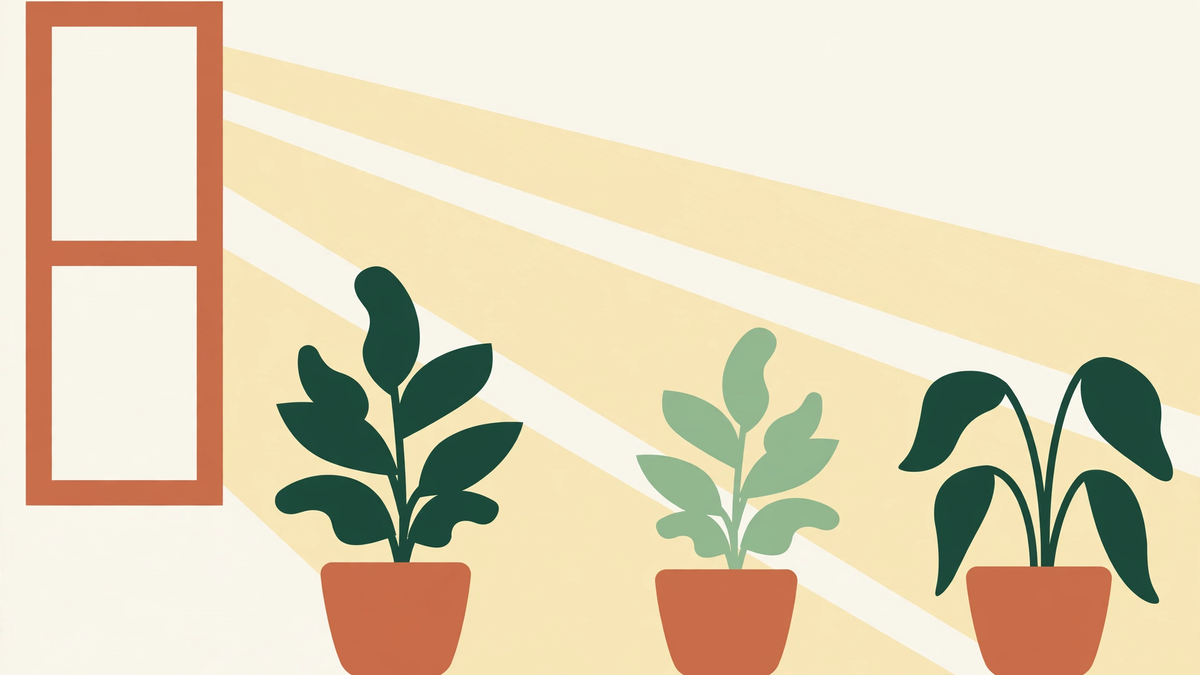
Tier 3: plants people think are low-light but aren't
This is the section that saves you money. These plants appear on low-light lists everywhere, and in my experience they decline in genuinely dim rooms. They may survive for months — which is how they earn the reputation — but they slowly lose leaves, stop growing, and eventually give up.
| Plant | Why it's listed as low-light | What actually happens in a dark room |
|---|---|---|
| Monstera deliciosa | "Tolerates low light" on care labels | Survives but never splits, grows tiny leaves on long bare stems, gradually weakens |
| Fiddle-leaf fig | Often sold as an easy statement plant | Drops leaves within weeks of a dim spot; needs bright light to hold its foliage |
| Succulents and cacti | "Easy care" gets confused with "low light" | Stretch tall and pale (etiolation), then rot — they need the brightest spot you have |
| Calathea | Marketed as a shade plant | Needs bright indirect light plus humidity; in a dim room it fades, crisps, and stalls |
| Ficus elastica (rubber plant) | Tough reputation | Drops lower leaves in low light and goes bare-legged; needs medium to bright light |
| String of pearls | Trailing, decorative, "easy" | Rots easily in low light because the soil stays wet; needs bright light and careful watering |
| Bird of paradise | Big leaves look tropical-shade | A sun lover — in low light it stops growing entirely and the leaves droop |
The pattern: "tolerates low light" on a label usually means "won't die immediately in medium light." If your room is genuinely dim — a faint shadow or less — stick to Tier 1 and 2. Save the monsteras and calatheas for your brightest rooms.
My dark-room experiment: six months, five plants
When I first started taking low light seriously, I ran a simple test. I put five plants in my darkest room — a north-facing spare room where the shadow test gives a faint, blurry shadow at best — and left them there for six months, from October to April, watering only when the soil dried out. No grow light, no rotation, no special treatment. I wanted to see what actually happens, not what the labels promise.
| Plant | Starting condition | After 6 months | Verdict |
|---|---|---|---|
| Snake plant | 6 leaves, 45 cm tall | 7 leaves, same height, one new leaf | Thrived — looked exactly the same, just with one more leaf |
| ZZ plant | 5 stems | 6 stems, one new shoot in month 5 | Thrived — slow but perfectly healthy |
| Golden pothos | Trailing, 60 cm long | Grew about 25 cm; variegation faded to mostly green | Coped well — grew slowly, looked healthy |
| Chinese evergreen | 8 leaves | 10 leaves, held its silver pattern | Thrived — the surprise star of the test |
| Peace lily | 12 leaves, one flower | 10 leaves, no flowers, smaller new leaves | Survived — alive but visibly less happy |
The results confirmed what the tiers above suggest: snake plant, ZZ, and Chinese evergreen genuinely cope with low light for months at a time. Pothos copes but changes — the fading variegation is the plant adapting, not failing. The peace lily survived but was clearly marking time; it perked up within weeks of moving to a brighter room.
The other thing the experiment taught me: in low light, the watering interval stretches dramatically. The snake plant went five weeks between waterings at one point in midwinter and didn't care at all. The pothos needed water every three weeks. If I'd watered them all on a fortnightly schedule — my old habit — at least two of them would have rotted.
Making a dark room work harder
You don't have to accept your dark room as it is. A few cheap changes can raise the light level enough to widen your plant options — or to help the plants you already have grow a little faster.
Move plants closer to the window. The single most effective change. A plant 30 cm from a window gets dramatically more light than the same plant two metres away. Even in a north-facing room, the windowsill is the brightest spot — use it.
Use mirrors and light walls. A mirror opposite a window bounces light deeper into a room. Pale walls reflect more light than dark ones. It won't turn a dark room bright, but it can lift a very-low-light spot into the low-light range where Tier 1 plants thrive.
Rotate your plants. If you have one bright room and one dark room, rotate plants between them every few weeks. A month in a bright spot recharges a plant that's been in the dark, and the swap keeps both rooms looking green. I rotate my pothos and philodendrons this way and they grow noticeably better than the ones that stay put.
Clean the windows and the leaves. Dirty windows block a surprising amount of light, and dusty leaves photosynthesise less. A quick window clean in spring and a wipe of the leaves every month or two makes a real difference in a dim room.
Consider a grow light. If you love a dark room and want more than Tier 1 plants, a small grow light changes everything. A single LED grow bulb in a standard lamp, on for 8–10 hours a day, can lift a dark corner into the medium-light range. It's the only way to keep plants in a genuinely windowless room. I run one in my hallway from autumn to spring, and the plants there grow almost as well as the ones by the window.
Choose the right pot and soil for low light. Plants in low light drink slowly, so soil stays wet longer. Use a free-draining mix with perlite or bark, and a pot with drainage holes. Terracotta pots help too — they breathe, so the soil dries faster than in plastic or glazed ceramic.
The care rules change in low light
Low-light plants don't just need different plants — they need different care. The routines that work for plants in bright rooms will kill plants in dim ones.
Water much less. This is the big one. A snake plant in bright light might need water every two weeks; the same plant in a dark hallway might go six weeks between waterings. The plant is barely growing, so it's barely drinking. Check the soil every time — if the top 5 cm is still damp, wait. Overwatering is the number one killer of low-light plants, because the soil stays wet for so long.
Feed rarely or not at all. A slow-growing plant in low light needs very little fertiliser. Feeding on a normal schedule builds up salts in soil that isn't being flushed by regular watering, and that burns roots. In low light, I feed at quarter strength, a few times a year at most — and I skip feeding entirely in winter.
Don't repot as often. Slow growth means the plant fills its pot slowly. Repotting a low-light plant into a bigger pot just gives it more wet soil to sit in. Repot only when roots are genuinely crowding the pot, and go up just one size.
Watch for pests. Low light plus damp soil plus still air is a comfortable environment for fungus gnats and mealybugs. Check the leaves and soil surface when you water. Good airflow helps — a room with a door that opens and closes is better than a sealed, still space.
Expect slow growth and don't panic. A ZZ plant that puts out two new stems in a year is doing fine in low light. A snake plant that doesn't grow at all over winter is normal. Slow is the price of the dim room, and it's not a problem to fix — it's the plant's natural pace in those conditions.
Room-by-room picks
Different dark rooms suit different plants. Here's what I'd choose for each:
| Room | Light reality | My picks |
|---|---|---|
| North-facing living room | Low to medium; some daylight all day | Chinese evergreen, pothos, peace lily, philodendron |
| Hallway with borrowed light | Very low; no direct window | Snake plant, ZZ plant, cast iron plant |
| Bathroom with a small window | Low light, high humidity | Peace lily, parlour palm, spider plant, pothos |
| Bedroom with one north window | Low; short daylight hours | Snake plant, ZZ plant, Chinese evergreen |
| Office with fluorescent light only | Very low natural light | Snake plant, ZZ plant — plus a grow light if you want more |
| North-facing windowsill | Medium-low but direct daylight | Pothos, spider plant, philodendron — see the best plants for a north-facing window for the full list |
Frequently asked questions
What is the best low-light houseplant?
Snake plant and ZZ plant are the toughest. Pothos and Chinese evergreen are the most forgiving if you also forget to water.
Can any houseplant survive with no natural light?
No plant thrives with zero natural light. Even the toughest need some daylight or a grow light to survive long-term.
How do I know if my room is low light?
Hold your hand 30 cm above the plant at midday. A faint, fuzzy shadow means low light; no shadow at all means very low light.
Do low-light plants need less water?
Yes — they grow slowly and drink less. Overwatering is the top killer of low-light plants, so check the soil before watering.
Will low-light plants grow in a dark room?
They grow slowly. Expect a few new leaves a year rather than a flush of growth — that is normal, not a problem.
If you remember one thing… in a dark room, pick a plant that genuinely copes — snake plant, ZZ, pothos, or Chinese evergreen — and then water it far less than you think it needs.