Tip a supermarket basil out of its pot and you'll see the problem immediately: twenty-odd seedlings crammed into a pot meant for three, their roots tangled into a solid mat. I learned this the slow way — my first supermarket basil died in nine days, and I assumed I was bad at herbs. It took me years to learn the truth: the pot was designed to die. Supermarket herbs are sown absurdly densely because a full-looking pot sells better than a sparse one. They're grown fast, in perfect greenhouse conditions, for a short shelf life. Your windowsill is a different world, and the plant arrives completely unprepared for it.
Once I understood that, windowsill herbs stopped being a mystery. The secret isn't a special technique. It's choosing herbs that suit indoor life, giving them the light they actually need, and — for supermarket pots — splitting them up before they strangle each other. This guide covers all three, plus the calendar I follow through the year.
Which herbs actually work on a windowsill
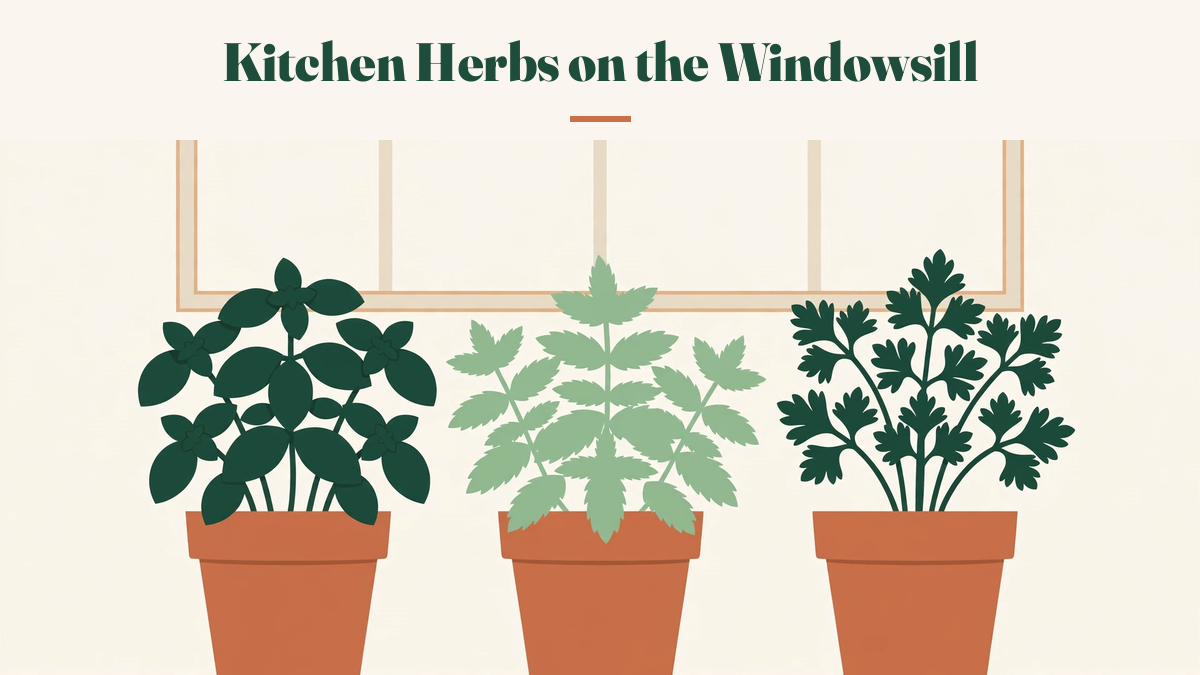
Not every herb belongs indoors. The Mediterranean herbs — rosemary, thyme, oregano, sage — evolved in hot, dry, sunny conditions, and a windowsill in a heated kitchen is a poor imitation of a hillside in Provence. They can work, but they're the hardest herbs to keep happy inside. The soft herbs — basil, mint, parsley, chives, coriander — are far more forgiving, because they evolved in milder conditions and tolerate the humidity and warmth of a kitchen.
| Herb | Light needed | Water | Harvest | Indoors difficulty |
|---|---|---|---|---|
| Basil | 6+ hours sun | Keep moist, never soggy | Pick from the top down | Easy in summer, hard in winter |
| Mint | 4+ hours sun | Keep moist | Cut stems freely | Very easy — almost too easy |
| Parsley | 4+ hours sun | Keep moist | Pick outer leaves first | Easy, slow to start |
| Chives | 4+ hours sun | Keep moist | Snip, leave 5 cm | Very easy, regrows fast |
| Coriander | 4+ hours sun | Keep moist | Pick outer leaves | Tricky — bolts in heat |
| Rosemary | 6+ hours sun | Let dry between waterings | Snip sprigs as needed | Hard indoors — wants sun and air |
| Thyme | 6+ hours sun | Let dry between waterings | Snip sprigs as needed | Hard indoors — hates wet feet |
| Oregano | 6+ hours sun | Let dry between waterings | Snip sprigs as needed | Moderate — better than rosemary |
If you're starting out, begin with mint, chives, and basil. Mint is nearly impossible to kill indoors — it will forgive missed waterings, low light, and aggressive harvesting, and it will keep coming back. Chives are nearly as tough, and they regrow within days of being cut. Basil is the rewarding one: it grows fast, it smells wonderful, and a healthy basil plant in July will give you enough leaves for pesto every week.
Coriander deserves a warning. It's one of the most popular herbs to grow, and one of the most frustrating indoors. It bolts — shoots up, flowers, and goes to seed — the moment it gets warm, which in a kitchen above a cooker is most of the time. If you love coriander, sow a small pot every three weeks so there's always a fresh one coming along, and accept that each plant has a short life.
Rosemary and thyme are the herbs people most often ask about, and my honest answer is that they're better on a sunny outdoor step than on a windowsill. Indoors, rosemary suffers from still air and low light — in my experience it goes woody and sparse, and it picks up powdery mildew in a humid kitchen. If you only have a windowsill, give rosemary your sunniest spot, your grittiest soil mix, and as much airflow as you can — an open window nearby helps enormously. My guide to plants for a sunny south-facing window covers which spots in the house give herbs the light they need.
The windowsill calendar
Herbs follow the seasons even indoors, because the light through your window changes dramatically across the year. Here's the calendar I follow — it's built around a temperate climate with distinct seasons, so shift it by a month or two if your winters are milder or harsher.
| Month | Sow / start | Harvest | Notes |
|---|---|---|---|
| January | Nothing — light too low | Lightly, from established plants | Growth nearly stops; water sparingly |
| February | Chives, parsley indoors | Lightly | Light returning; start feeding again late Feb |
| March | Basil, coriander, mint | Parsley, chives | Best sowing month — light and warmth rising |
| April | Basil (second sowing) | All herbs, increasing | Move pots to the sunniest sill |
| May | Top up any gaps | All herbs freely | Peak sowing for succession coriander |
| June | Coriander (succession) | Heavy harvest — basil, mint | Longest days; herbs at their best |
| July | Coriander (succession) | Heavy harvest | Watch for basil bolting in heat |
| August | Parsley for autumn | Heavy harvest | Start a fresh basil for September |
| September | Chives (divide and repot) | All herbs, easing off | Light falling; last big harvests |
| October | Nothing new | Lightly | Move herbs back from cold sills at night |
| November | Nothing | Sparingly | Growth slows; stop feeding |
| December | Nothing | Sparingly | Shortest days; herbs rest |
The two things that surprise people most about this calendar are January and March. In January, your herbs are barely alive — not dying, just resting — and the worst thing you can do is overwater them or feed them in an attempt to wake them up. Leave them alone and wait. In March, everything changes: the light comes back, and it's the best month of the year to sow. A basil seed sown in mid-March will be a usable plant by May.
Succession sowing — sowing a small pot every few weeks — is the trick that keeps you in fresh herbs all summer. It matters most for coriander and basil, which both have a limited productive life. I sow a fresh pot of coriander every three weeks from March to August, and a fresh basil every six weeks. The old pots get composted when they bolt or go woody, and there's always a young plant coming up behind them.
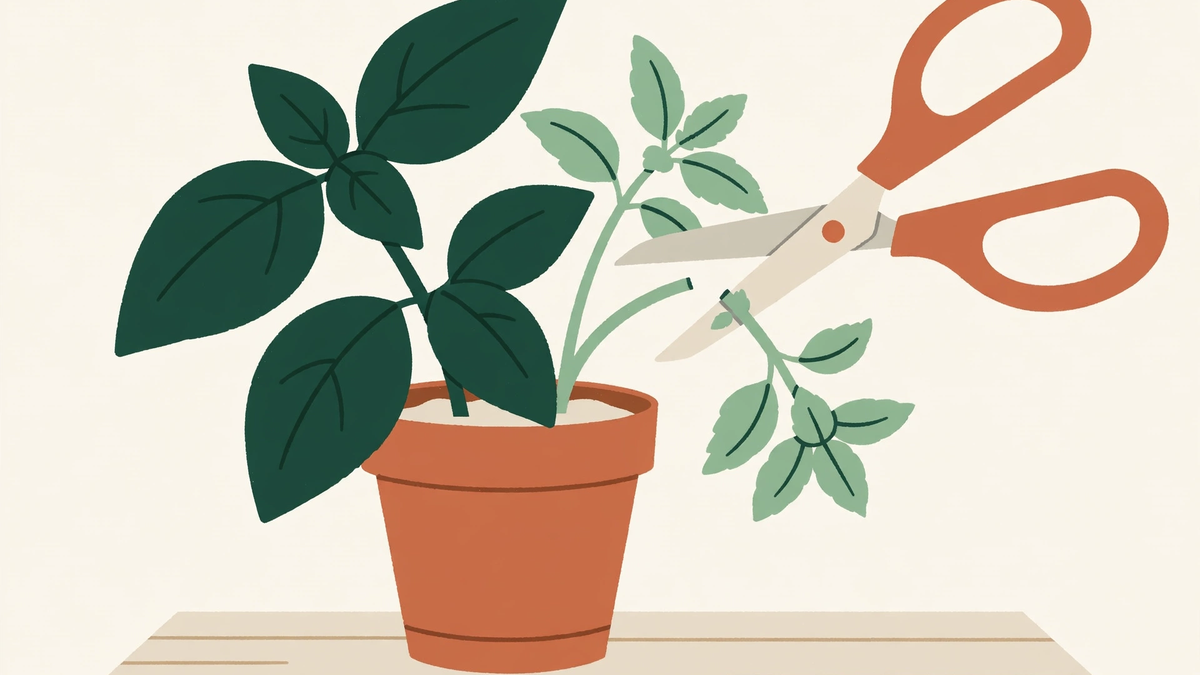
From supermarket pot to long-lived plant
That basil that died in nine days? The fix takes ten minutes and a bit of ruthlessness. Here's the rescue, step by step — it works for basil, mint, parsley, and coriander from any supermarket.
Step 1: Take the plant out of its pot. Tip it out gently and look at the root ball. You'll see a dense mat of thin white roots and far too many stems — sometimes thirty or more in a single pot. That's the problem, right there.
Step 2: Tease it apart. Gently pull the root ball into three or four smaller clumps, each with a few healthy stems. You'll break some roots — that's fine, herbs are tougher than they look. If the root ball is too tangled to pull apart, use a clean knife to cut it into quarters. It feels brutal. It works.
Step 3: Repot each clump into its own pot. Use a 10–13 cm pot with drainage holes and ordinary multipurpose compost. Plant each clump at the same depth it was growing before, firm the soil gently, and water well.
Step 4: Harden it off. A supermarket herb has lived in a warm, humid greenhouse. Your kitchen is drier and the light is harsher. For the first week, keep the repotted herbs out of direct midday sun and water them a little more often than you normally would. After a week, move them to their permanent sunny spot.
Step 5: Start harvesting — from the top. Once the plant has settled, pinch the growing tip out of each stem. This feels wrong — you're removing the best-looking part — but it's what makes a basil plant bushy instead of tall and spindly. Every pinch forces two new side shoots to grow, and those side shoots are your future harvest.
I did this with a supermarket basil three years ago and the plant lasted eighteen months — through a winter indoors, a spring repot, and a summer of weekly pesto. The same pot, unsplit, would have died in a fortnight. The difference wasn't luck. It was space.
Harvesting without killing the plant
The rule for harvesting herbs is simple: never take more than a third of the plant at once. A plant that's had a third of its leaves removed recovers in a week or two. A plant that's been stripped bare often doesn't recover at all, because it has no leaves left to photosynthesise with.
For basil, always harvest from the top down. Pinch or snip the stem just above a pair of leaves, and two new stems will grow from that point. Never strip the bottom leaves and leave a bare stem with a tuft at the top — that's how basil goes leggy. If your basil starts flowering, pinch the flower buds off immediately; once basil flowers, the leaves turn bitter.
For mint and chives, you can be much rougher. Cut whole stems of mint down to a few centimetres above the soil, and it will regrow from the base within weeks. Snip chives with scissors, leaving about 5 cm of stubble, and they'll be back in ten days. These are the herbs to grow if you cook with herbs every day, because they tolerate heavy harvesting.
For parsley, pick the outer leaves first and leave the centre to keep growing. Parsley grows from the middle outward, so the outer leaves are the oldest and the centre is the future. Pick from the outside and the plant keeps producing for months.
For woody herbs — rosemary, thyme, oregano — snip sprigs from the tips and never cut into the old woody stems, because woody stems rarely regrow. A rosemary plant that's been cut back to bare wood is usually finished.
One big pot or several small ones?
Every windowsill herb display faces the same choice: one long trough with everything planted together, or a row of individual pots. The trough looks tidier in photos. In practice, individual pots win — and the reason is water.
Herbs in a shared trough share the same soil moisture, but they don't want the same moisture. Basil and mint like steady dampness; rosemary and thyme want to dry out between waterings. In one trough, you're always compromising: the basil is slightly too dry or the rosemary is slightly too wet, and one of them pays for it. I ran a trough for a year with basil, parsley, and thyme in it, and the thyme rotted by August while the basil never quite thrived. The same three herbs in separate pots, watered individually, lasted the full season and into the next.
Individual pots have two more advantages. You can move them: the basil goes to the sunniest end of the sill in the morning and the mint slides back into partial shade. And you can replace one without disturbing the others — when the coriander bolts, as it will, you lift that pot out and slot a fresh one in, and the rest of the display never notices.
The one case where a trough works is a group of herbs with genuinely matching needs. Parsley, chives, and mint all like steady moisture and similar light, and they look good together in a long planter. Even then, keep the mint in its own small pot sunk into the trough — mint spreads by underground runners and will take over a shared container within a season if you let it.
Pot size matters more than pot style. A single basil plant wants at least a 13 cm pot; anything smaller dries out twice a day in summer. Chives and parsley are happy in the same size. For a trough, go at least 15 cm deep — shallow troughs dry out too fast and the herbs spend the summer stressed.
The mistakes that kill windowsill herbs
After years of windowsill herbs, the same five mistakes account for almost every death.
Too little light. The most common killer. A north-facing windowsill is not enough for basil, rosemary, or thyme — they need direct sun. If your only sill faces north, grow mint and parsley and accept that basil isn't for your kitchen.
No drainage. Herb pots without drainage holes rot the roots within weeks. Every herb pot needs a hole and a saucer, and the saucer needs emptying after watering. Herbs sitting in standing water is the fastest way to kill them.
Overwatering in winter. Herbs barely grow in winter and use very little water. The watering routine that kept your basil happy in July will drown it in January. Check the soil before watering, every time — the finger test never lies.
Cooker heat and steam. A windowsill directly above a cooker looks convenient but it's a hostile spot: bursts of heat, steam, and cooking grease. Herbs want steady conditions. A sill across the kitchen, away from the hob, is a better home.
Never repotting. A herb in the same small pot for a year has exhausted its soil. Repot into a slightly bigger pot each spring, with fresh compost, and the plant will reward you with a season of vigorous growth. If you're unsure how watering needs change as plants grow, my guide to watering houseplants covers the principles that apply to herbs as much as to any other indoor plant.
Frequently asked questions
Which herbs grow best on a windowsill?
Basil, mint, parsley, and chives are the most reliable indoors. Rosemary and thyme can work but need more sun and drier soil than most windowsills provide.
Why does supermarket basil die so quickly?
Supermarket pots are sown far too densely — dozens of seedlings in one small pot — so they compete for water, light, and nutrients. Splitting the pot into several smaller pots is the fix.
How much light do indoor herbs need?
Most culinary herbs want around 6 hours of direct sun a day, which means a south- or west-facing windowsill. Mint, parsley, and chives cope with less.
How often should I water windowsill herbs?
Check the soil every couple of days. Basil and mint like steady moisture; rosemary and thyme prefer to dry out between waterings. Never let herbs sit in standing water.
Can I grow herbs indoors all year round?
Yes, with a bright windowsill. Growth slows in winter when light drops, so harvest less from December to February and expect herbs to look thinner until spring.
Should I feed indoor herbs?
A half-strength liquid feed once a month in spring and summer is enough. Overfeeding makes herbs grow fast but taste weak.
If you remember one thing… supermarket herbs aren't dying because of you — split the pot, give them sun, and they'll last months instead of days.