The first time a plant of mine turned yellow, I did everything wrong in the space of an afternoon. I watered it (it was already drowning), then I moved it (into direct sun), then I fed it (on top of everything else). By the end of the week it had lost six leaves and I had learned the most important lesson in houseplant troubleshooting: a yellow leaf is a symptom, not a diagnosis — and treating the symptom without knowing the cause makes things worse.
Yellow leaves are the single most common thing people ask me about, and the reason they cause so much panic is that they can mean almost anything. Too much water, too little water, not enough light, old age, pests, a cold draught, a recent move — the plant's vocabulary is small, and yellow is its word for most of its problems.
The good news is that the pattern of the yellowing tells you the cause, if you know how to read it. Which leaves turned yellow? How fast? What does the soil feel like? What changed recently? Answer those four questions and you'll usually have your diagnosis before you finish reading this guide. What follows is every cause I've actually seen, in the order I now check them.
Start here: read the leaf before you act
Before you water, move, feed, or prune anything, look closely at the yellow leaves. The pattern is the diagnosis. This table is the one I wish someone had handed me years ago — it covers the vast majority of yellow-leaf cases you'll ever see.
| Pattern | Most likely cause | What to check |
|---|---|---|
| Oldest, lowest leaves only, one or two at a time | Natural ageing | Nothing — this is normal if the rest of the plant looks good |
| Lowest leaves, several at once, soil wet | Overwatering | Soil moisture; drainage; smell the soil for rot |
| Leaves all over, pale and limp, soil dry | Underwatering | How long since the last water; whether the soil has pulled from the pot |
| New leaves yellow, old leaves fine | Overwatering or nutrient deficiency | Roots first, then feeding history |
| Yellow between green veins (interveinal) | Nutrient deficiency, often magnesium or iron | When you last fed; water pH if it's persistent |
| Yellow edges and tips, rest green | Fertiliser burn, fluoride, or low humidity | Feeding strength; water source |
| Yellow with brown crispy patches | Sunburn or cold damage | Recent moves; window position; draughts |
| Yellow with tiny webs or sticky residue | Pests (spider mites, scale) | Undersides of leaves; stems; a magnifying glass helps |
| Whole plant yellowing fast after a move | Shock | What changed: new home, repot, temperature swing |
| Yellow leaves + black, mushy stems | Root rot, advanced | Roots — this one is urgent |
Read the row that matches your plant, then jump to the matching section below. And remember the first rule of plant triage: change one thing at a time. If you water, move, and feed in the same afternoon, you'll never know what worked — or what made it worse.
The five-minute check
When I find a yellow leaf now, I run the same quick check before doing anything else. It takes five minutes and it prevents almost every misdiagnosis.
- Feel the soil. Push a finger 5 cm in. Wet, damp, or dry? This single check splits the causes in half — most yellow-leaf problems are water problems, and the soil tells you which direction.
- Lift the pot. A pot that's heavy for its size is holding water; a light pot is dry. With practice, the weight test becomes faster than the finger test.
- Look at the drainage. Is there water sitting in the saucer? Are the drainage holes blocked? Is the pot sitting in a cover pot with a puddle at the bottom?
- Check the light. Has the plant been moved recently? Has the season changed — shorter days, weaker sun? Is something now shading it that wasn't before?
- Think about what changed. New plant? Repotted recently? Started feeding? Heating came on? A cold snap? Plants react to change slowly — the yellow leaf you're seeing now may be a response to something that happened two or three weeks ago.
- Inspect the leaves. Flip a few over. Look for webbing, tiny dots, sticky residue, or white fluff. Pests are much easier to treat when you catch them early.
Write the answers down if you like — a quick note on your phone is enough. It sounds fussy, but when you're staring at the same plant a week later wondering whether it's getting better, that note is gold.
Cause 1: too much water (the most common one)
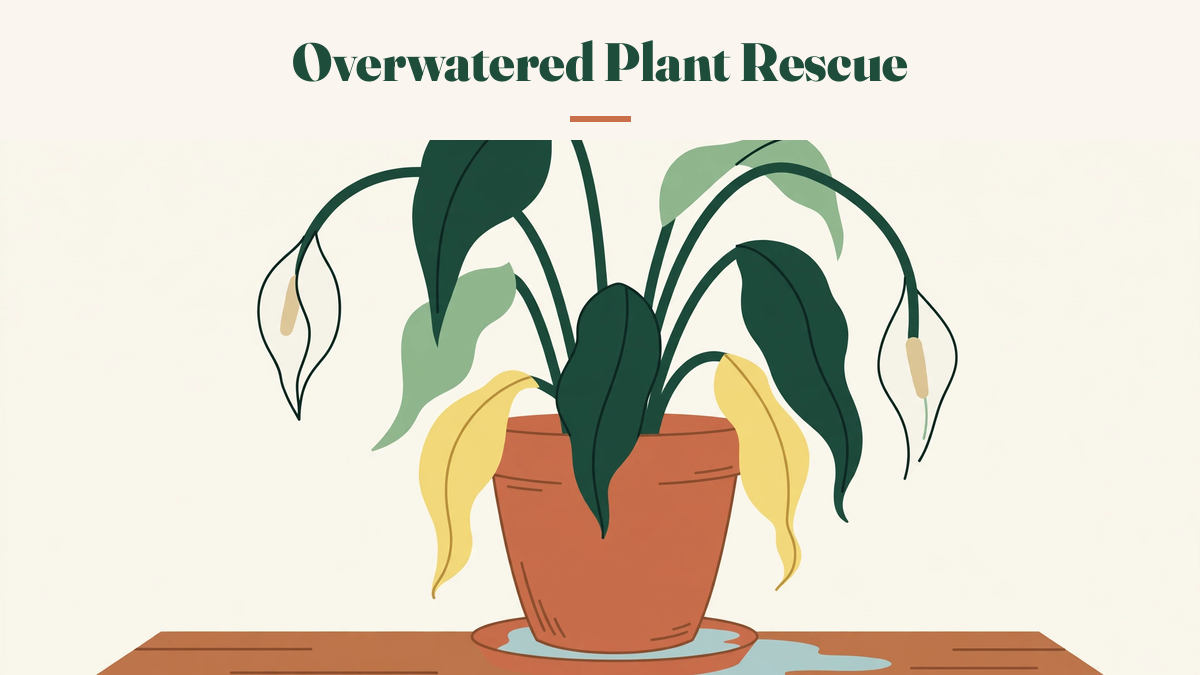
If I had to bet on a single cause for yellow leaves across all houseplants, I'd bet on overwatering every time. It's the number one plant killer indoors, and it's the cause I got wrong most often when I was starting out — because the instinct when a plant looks unhappy is to water it, and that instinct is wrong about half the time.
How it works. Roots need oxygen as well as water. When soil stays soggy, the air pockets fill with water, the roots suffocate, and they start to rot. A plant with damaged roots can't take up water properly — which is why an overwatered plant can look thirsty, drooping and yellowing, and why watering it more only speeds up the damage.
The signs. Yellowing starts on the oldest, lowest leaves and spreads upward. The leaves feel soft and limp rather than dry and crispy. The soil stays wet for days after watering. The pot may smell musty or sour. In bad cases, the stem feels soft at the base.
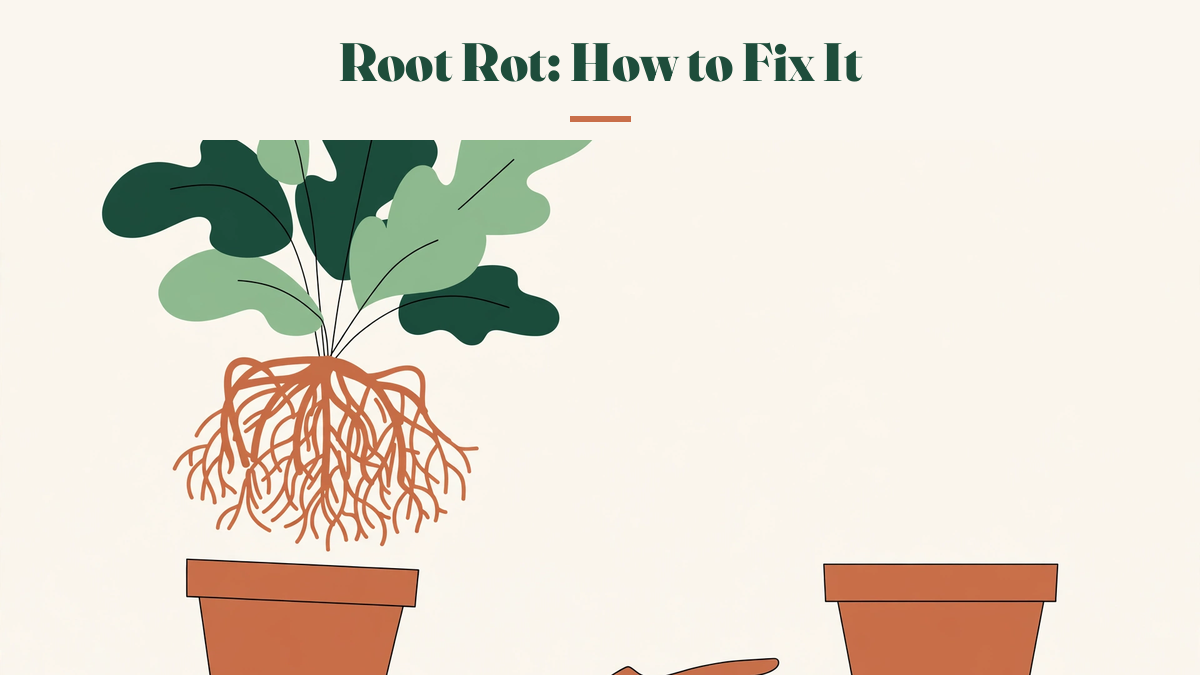
The fix. Stop watering and let the soil dry out properly — right through, not just the surface. Make sure the pot drains and the saucer is empty. Remove the yellow leaves (they won't recover). If the soil stays wet for more than a week or the plant keeps declining, take it out of the pot and check the roots: healthy roots are firm and pale; rotting roots are dark, soft, and smell bad. Trim the rotten ones with clean scissors and repot into fresh, airy mix. The full rescue process is in my guide to how to fix root rot, and there's a dedicated rundown of the warning signs in signs of an overwatered houseplant.
Prevention. Water by feel, not by calendar — check the top 5 cm of soil before watering, and always let excess water drain away. A pot with drainage holes and a chunky, airy soil mix makes overwatering much harder to do by accident.
Cause 2: too little water
Underwatering is the kinder mistake — easier to spot, faster to fix, and rarely fatal unless it goes on for weeks. But it does yellow leaves, and it's easy to confuse with overwatering if you only look at the leaves.
The signs. The whole plant droops, not just one or two leaves. Leaves yellow from the edges inward and feel dry and crispy, not soft. The soil is dry all the way down — you can check with a wooden skewer pushed to the bottom of the pot — and it may have pulled away from the sides of the pot, leaving a gap. The pot feels noticeably light.
The fix. Water thoroughly and slowly, until water runs from the drainage holes. If the soil has gone hydrophobic — water runs straight through without soaking in — set the pot in a bowl of water for 20–30 minutes so the soil can absorb moisture from below. Then let it drain properly. Most plants perk up within a day. Remove any leaves that are fully yellow and crispy; leaves that are only partly yellow may stabilise.
Prevention. The answer is the same as for overwatering, which is the annoying thing: check the soil before watering. A plant that dries out every three days in summer may go three weeks between waterings in winter. The soil tells you; the calendar doesn't.
Cause 3: natural ageing — the one that needs no fix
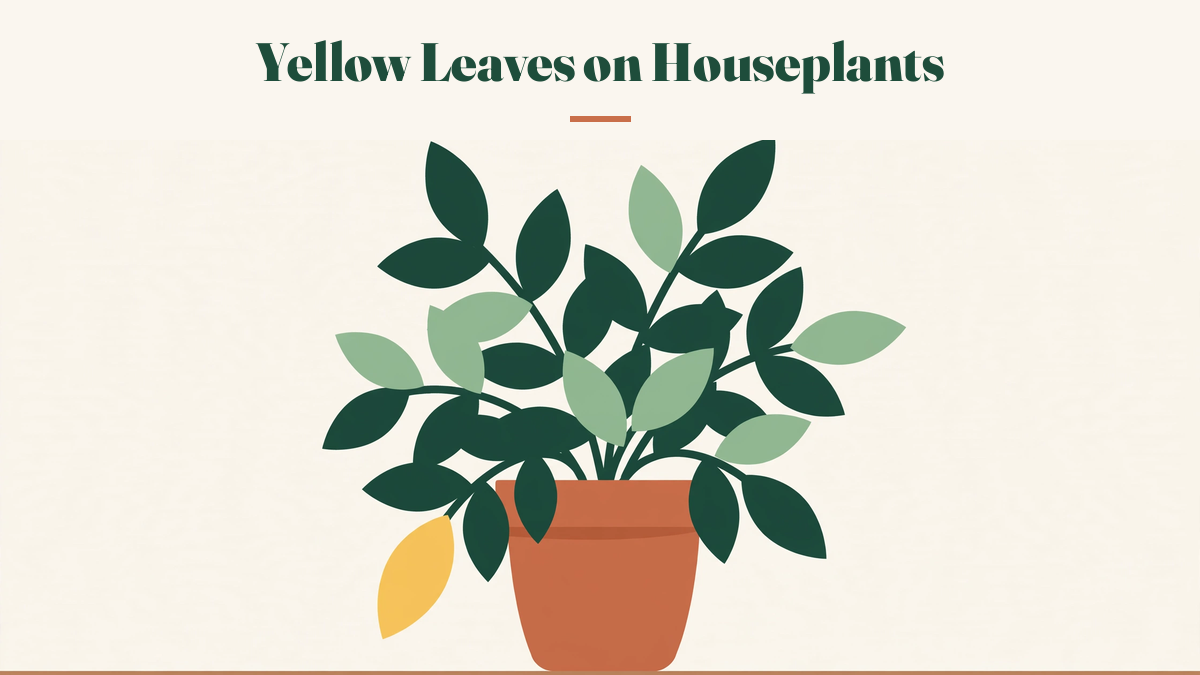
This is the cause nobody talks about, and it's the one that causes the most unnecessary worry. Leaves don't live forever. On most houseplants, the oldest, lowest leaf yellows and drops every few weeks or months as the plant puts its energy into new growth at the top. It's normal, healthy, and not a problem.
How to tell it's ageing, not a problem: it's one leaf at a time (occasionally two), always the oldest leaf, and the rest of the plant looks healthy — new growth coming through, firm stems, good colour. The yellow leaf fades evenly and drops off on its own or comes away with a gentle tug.
What to do: nothing, except remove the leaf once it's fully yellow so the plant stops spending energy on it. Snip it at the base of the stem with clean scissors. If the plant is dropping a lower leaf every time it grows a new one, that's a balance, not a decline — the plant is maintaining its size.
The time to worry is when the rate changes: if a plant that used to lose a leaf every couple of months suddenly drops four in a week, something else is going on. Go back to the five-minute check.
Cause 4: not enough light
Light is the cause people miss most often, because our eyes are terrible judges of indoor light. A room that looks bright to us can be a cave to a plant — our pupils adjust, but the plant can't. I once kept a pothos on a bookshelf three metres from a window for a year and wondered why it yellowed and stretched; the light there was a fraction of what it needed.
The signs. Yellowing is gradual and spread across the plant rather than concentrated at the bottom. New growth is small, pale, and spaced out along long, thin stems — the plant is reaching for light it can't find. The plant leans hard toward the window. Growth slows or stops entirely.
The fix. Move the plant closer to a window — a metre or two from a bright window is a good starting point for most houseplants. Move it gradually if the new spot gets direct sun, to avoid scorching leaves that have been in shade. Don't expect instant results: new growth will show the improvement first, and old yellowed leaves won't recover.
A quick reality check. Hold your hand 30 cm above the plant at midday. A clear, defined shadow means bright light. A soft, fuzzy shadow means medium light. Barely any shadow means the spot is too dark for most plants. If you're struggling to judge light in your home, my guide to how much light indoor plants really need walks through it in detail.
Cause 5: a hungry plant
Plants in pots live in a closed system. Unlike garden plants, they can't send roots out to find new nutrients — once the compost is exhausted, that's it until you feed them or repot. A plant that's been in the same pot for two years without feeding is running on empty.
The signs. Yellowing from nutrient deficiency tends to be gradual and even. Older leaves yellow first — the plant moves mobile nutrients like nitrogen from old leaves to new growth. A classic pattern is yellow leaves with green veins (called interveinal chlorosis), which points to a magnesium or iron shortage. Growth is slow, and new leaves are smaller and paler than the old ones.
The fix. Feed with a balanced liquid houseplant fertiliser at half the strength on the label, every two to three weeks through spring and summer. Don't double the dose hoping for a faster fix — too much fertiliser burns roots and causes its own yellowing, which is how people end up chasing their tail. If the plant hasn't been repotted in two years or more, fresh compost may do more good than fertiliser: it replaces exhausted soil and gives the roots room to grow.
A word of caution. Nutrient deficiency is genuinely less common than the internet suggests. Before you reach for fertiliser, rule out water and light first — they're far more likely, and feeding a stressed, overwatered plant makes things worse. Feed a healthy plant that's growing; don't feed a sick one. The full rundown on fertiliser types and timing is in how to feed indoor plants.
Cause 6: pests and disease
Pests are the cause everyone fears and the one that's actually least common — but they're worth checking for, because early treatment is easy and late treatment is a battle.
Spider mites are the usual suspects for yellowing: tiny, almost invisible, they suck sap from leaves and leave a fine stippled yellowing, often with delicate webbing where the leaf meets the stem. They love dry air and spread fast in winter when the heating is on. Scale insects appear as small brown bumps on stems and leaf undersides, often with sticky residue on the leaves below. Mealybugs look like tiny tufts of white cotton in leaf joints.
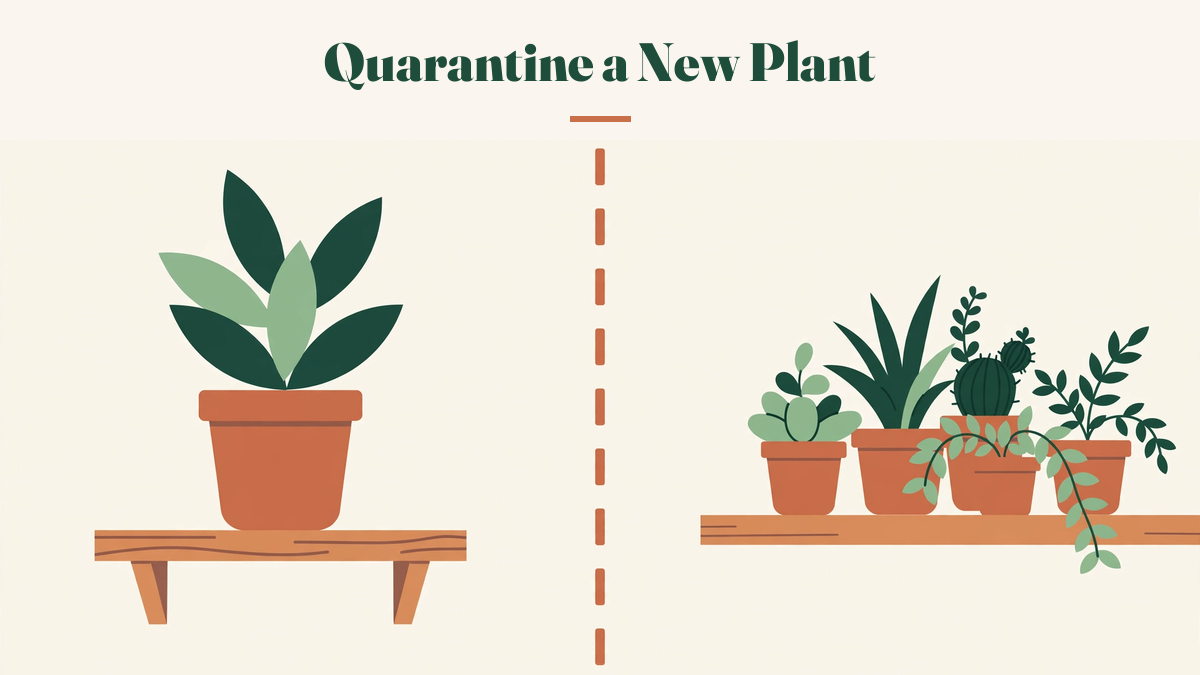
The fix. Isolate the plant first — pests spread to neighbours fast. For a light infestation, wipe the leaves with a damp cloth, then spray with a mix of water and a few drops of mild soap, covering the undersides. Repeat weekly for a month: most pests have a life cycle of a few weeks, and one treatment rarely gets the eggs. For stubborn cases, neem oil is a reliable next step.
Disease is rarer indoors but shows up as yellow leaves with dark spots, rings, or a mushy stem. Fungal leaf spot usually follows overwatering or leaves staying wet. Remove affected leaves, improve air circulation, and avoid wetting the foliage when you water.
Cause 7: shock and stress
Plants hate sudden change, and they show it by yellowing. A new plant that drops leaves in its first two weeks at home is usually just adjusting — it went from a humid, brightly lit greenhouse to your living room, and it's recalibrating. The same goes for a plant that's been repotted, moved to a new room, or caught in a cold draught from an open window.
The signs. Yellowing starts within a week or two of the change and affects leaves all over the plant, not just the bottom. The plant otherwise looks healthy — firm stems, no pests, soil moisture fine.
The fix. Mostly, patience. Keep the plant's conditions steady — same spot, same watering routine — and give it a few weeks to settle. Don't repot a shocked plant, don't move it again, and don't feed it. Remove yellowed leaves as they go. New growth is the sign it's recovering; if new leaves come through green, the plant has adjusted.
Cold damage is the exception: if a plant has been near an open window on a frosty night or next to a cold pane of glass, the damaged leaves may go yellow, then brown and mushy. Move it somewhere warmer and trim the worst leaves. Most tropical houseplants sulk below about 12°C, and a few minutes of cold air through an open window can be enough.
The recovery plan: what to do this week
Whatever the cause, the recovery follows the same shape. Here's the checklist I use — one week, one change at a time, no panic.
Day 1 — Diagnose. Run the five-minute check. Identify the most likely cause from the pattern table. Change ONE thing: water, move, or dry out — whichever matches the diagnosis.
Day 1 — Tidy up. Snip off leaves that are fully yellow at the base of the stem. They're not coming back, and removing them lets you see clearly whether new yellowing appears.
Day 2–3 — Observe. Don't do anything else. Check the soil moisture. Look for new yellowing. A plant that has stopped declining is already recovering, even if it doesn't look better yet.
Day 4–5 — Reassess. If the yellowing has stopped, you're on the right track — keep conditions steady. If it's spreading, re-run the check: is there a second cause? (Overwatering plus low light is a common pair.) If the soil is still wet after several days, consider unpotting to check the roots.
Day 7 — Look for new growth. New leaves are the real sign of recovery, and they may take weeks to appear. But a plant with no new yellowing, firm stems, and healthy-looking remaining leaves is a plant that's going to be fine.
What not to do during recovery: don't fertilise a stressed plant, don't repot unless the roots are rotting, don't move it repeatedly hunting for the "right" spot, and don't water on a schedule. Steady and boring is what recovery looks like.
When yellow leaves are an emergency
Most yellow leaves are a slow problem with a slow fix. But a few situations need fast action:
- The stem is soft or black at the base. This is rot reaching the stem. Take cuttings from any healthy growth above the rot immediately — the main plant may not survive.
- The whole plant yellows in a few days. Something systemic is wrong — usually root rot or a severe pest infestation. Unpot and check the roots today.
- Yellow leaves plus a sour smell from the soil. Rot is active. Unpot, trim, repot into fresh mix.
- A new plant yellowing fast after purchase. Check for pests first (new plants are the most common way pests enter a collection), then check whether the roots are sitting in soggy compost — nursery pots are sometimes waterlogged.
In every other case, you have time. Yellow leaves are an early warning system, not a death sentence — they're the plant telling you something needs to change, and most of the time the change is small.
Frequently asked questions
Should I cut off yellow leaves?
Yes, once a leaf is fully yellow it won't recover. Snip it at the stem so the plant stops feeding a dying leaf.
Can a yellow leaf turn green again?
No. Once a leaf has yellowed, the chlorophyll is gone. Fix the cause so the next leaves stay green.
Is one yellow leaf a problem?
Usually not. One yellow lower leaf on an otherwise healthy plant is often just natural ageing.
What is the most common cause of yellow leaves?
Overwatering. Soil that stays wet suffocates roots, and the plant drops its oldest leaves first.
Do yellow leaves mean my plant is dying?
Rarely on their own. Yellow leaves are an early warning — most causes are fixable if you act on the pattern quickly.
If you remember one thing… read the pattern before you act — which leaves, how fast, and what the soil feels like will tell you the cause, and the cause tells you the fix.