The plant that taught me to quarantine cost me eight pounds. It was a pothos from a market stall, healthy-looking, a bargain. I brought it home and put it straight on the shelf with the rest of my plants, because that's what I'd always done. Three weeks later, the pothos had thrips — and so did the monstera next to it, the philodendron below it, and, eventually, the calathea across the room. One plant, four infestations, and a month of weekly washing and spraying to clear them all.
That was the last plant that went straight onto the shelf. Every new arrival now spends two weeks in quarantine first, and since then I've caught mealybugs, spider mites, and fungus gnats on new plants before they reached a single neighbour.
What quarantine actually catches
Quarantine works because most houseplant pests have a delay built in. The plant you bring home may look clean while carrying eggs inside its leaves, pupae in its soil, or nymphs too small to notice. Two weeks is long enough for the hidden stages to hatch and become visible — which is the whole point. You're not waiting for the plant to look sick; you're giving the pests time to show themselves.
The usual suspects:
- Spider mites. Tiny, and the fine webbing only appears once the population is established. Early signs are faint yellow speckling on the leaves. My guide to spider mites covers the full treatment, but catching them in quarantine means you treat one plant, not ten.
- Mealybugs. White, cottony clusters in leaf joints and stem crevices. Slow-moving and easy to miss on a quick look, obvious on a careful one.
- Thrips. Silvery patches on leaves with tiny black dots. Adults fly, which is why a thrips plant next to your collection is a disaster.
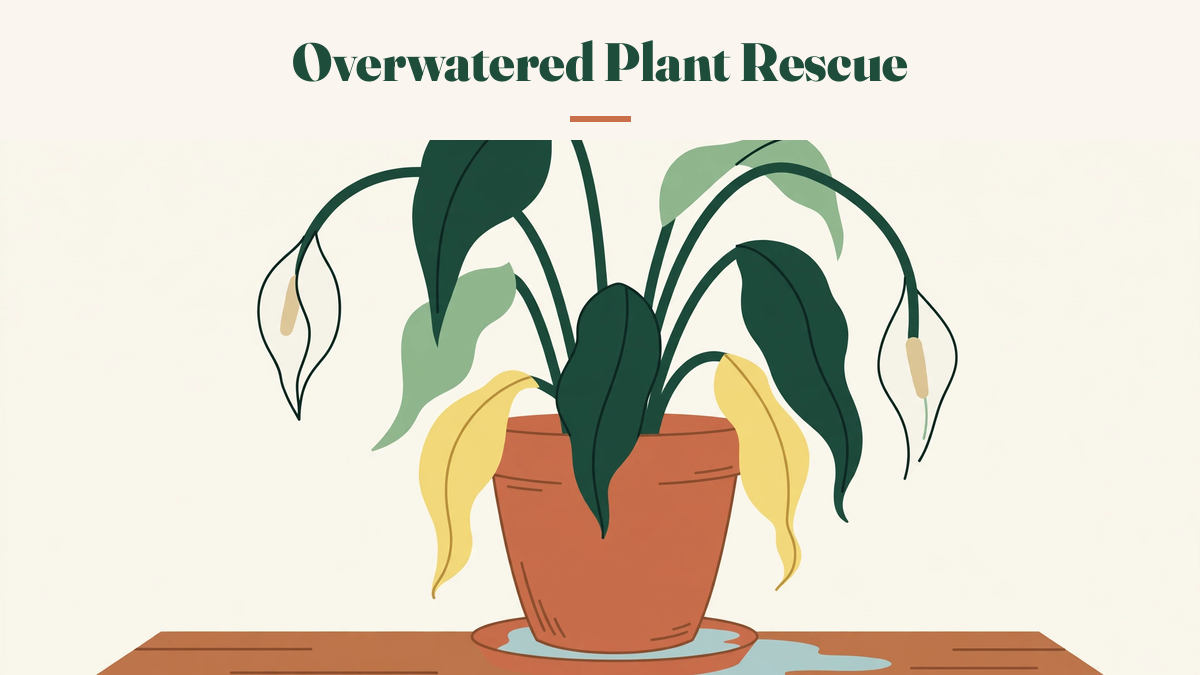
- Fungus gnats. Tiny black flies around the soil. Usually a sign of overwatered nursery compost, but they spread fast and they're miserable to live with.
- Scale. Small brown bumps on stems and leaf undersides that look like part of the plant. They don't move, which makes them easy to overlook.
Quarantine also catches non-pest problems: root rot hiding under healthy leaves, a plant overwatered at the nursery, or one simply stressed from the journey.
Setting up a quarantine spot
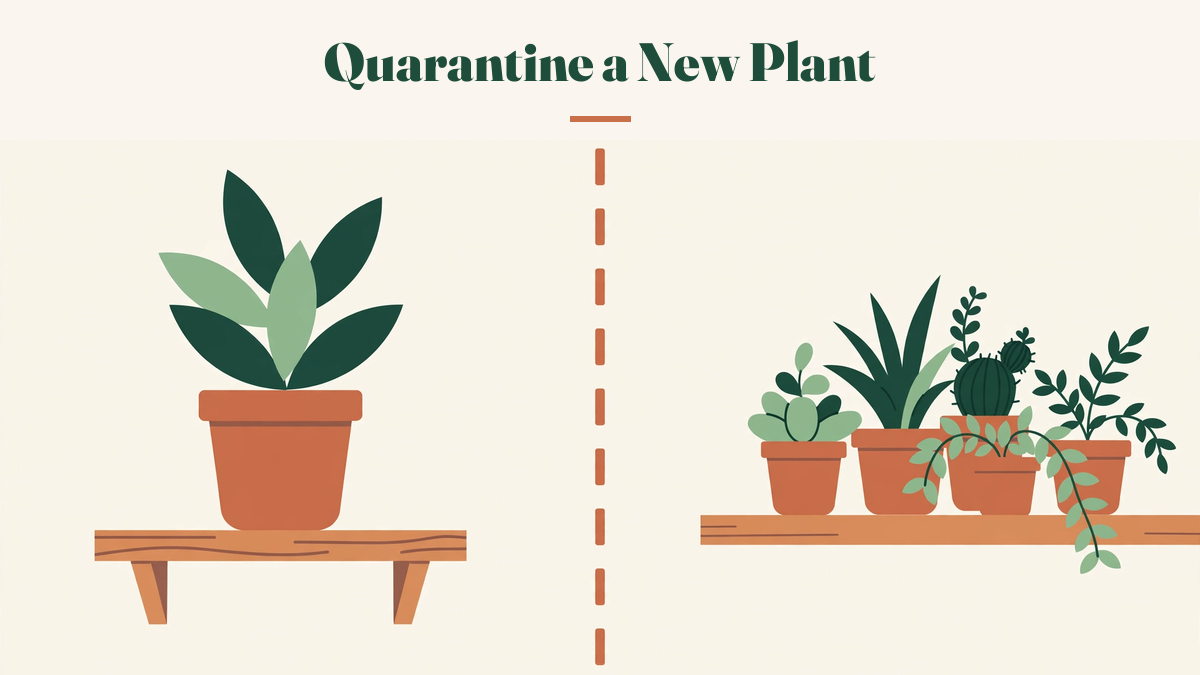
You don't need a greenhouse or a spare room with grow lights. You need a spot that meets three conditions: away from your other plants, with enough light for the plant to stay healthy, and where you'll actually remember to check on it.
Where. A different room is best — a spare bedroom, a bathroom with a window, a kitchen windowsill, even a hallway shelf if it gets some light. If you only have one room, put the new plant as far from the others as you can, ideally a metre or more away. A bathroom works well: it's humid, and I walk in daily so I never forget the inspections.
Light. Quarantine light should be similar to what the plant will eventually get — bright indirect light for most tropical houseplants. Don't quarantine a plant in a dark corner; a stressed plant in quarantine tells you nothing useful, because you can't tell stress from pest damage.
What you need. Very little: a saucer, a magnifying glass or a phone with a good zoom camera, and a yellow sticky trap, which catches fungus gnats and gives an early warning of anything flying.
The two-week inspection routine
Quarantine isn't just leaving a plant alone in another room for a fortnight. It's an inspection routine, and the inspections are where the value is. Here's the schedule I use:
| When | What to do |
|---|---|
| Day 1 — arrival | Full inspection before the plant goes anywhere near the others. Check both sides of every leaf, the stems, the leaf joints, and the soil surface for webbing, sticky residue, white fluff, black dots, and anything moving. Wipe the leaves with a damp cloth. |
| Day 1 — after inspection | Place in the quarantine spot with a sticky trap. Water only if the soil is dry — nursery compost is often waterlogged. |
| Day 3 | Quick check: undersides of a few leaves, the trap, the soil surface. Two minutes. |
| Day 7 — week one | Full inspection again, same as day 1. This is the most important check — a week is long enough for hidden eggs to hatch and become visible. |
| Day 10 | Quick check. Look at the newest growth especially — pests love young, soft leaves. |
| Day 14 — graduation | Final full inspection. If the plant is clean and the trap is empty, it joins the collection. If anything looks off, extend quarantine another week. |
The day-7 check is the one that catches most problems. Thrips eggs hatch within days, spider mite populations become visible in a week, and mealybugs that were hiding as tiny crawlers are big enough to spot. If I could only do one inspection, it would be the day-7 one. A cheap 10x magnifying loupe helps enormously here — spider mites at 10x are unmistakable.
Two weeks is my floor, not the ceiling. Colorado State Extension recommends quarantining new plants for at least three weeks, and I use three or four for swaps, clearance plants, or anything that looked rough at the shop.
What to do if you find something
Finding a pest in quarantine means the system worked.
| What you found | What to do |
|---|---|
| A few fungus gnats | Let the top soil dry out between waterings, keep the sticky trap up, and wait. They usually clear in a week or two. |
| Mealybugs, a small number | Dab each one with rubbing alcohol on a cotton bud, then wipe the whole plant. Repeat twice a week until none appear for two weeks. |
| Spider mites | Wash the plant thoroughly in the shower, then spray with insecticidal soap weekly for three weeks. |
| Thrips | Wash, spray with insecticidal soap or neem oil, and add a blue sticky trap. Treat weekly for four weeks — eggs inside the leaves mean one spray never works. |
| Scale | Pick off each insect with a fingernail or a cotton bud dipped in rubbing alcohol. Repeat weekly until clear. |
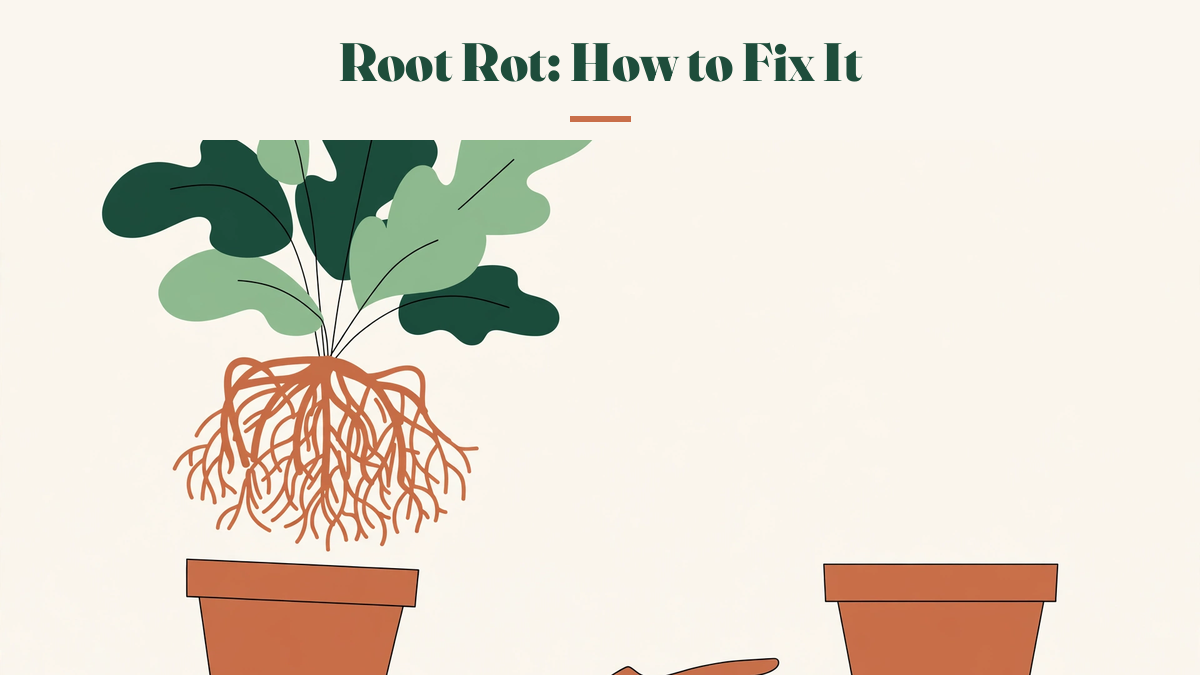
| Root rot (mushy, smelly roots) | Unpot, trim the rot, repot into fresh mix, and keep the plant isolated until it's stable. |
Whatever you find, reset the quarantine clock after treatment: the plant stays isolated until it's been clean for a full two weeks. A plant that's "probably clear" goes back into quarantine, not onto the shelf.
The mistakes I made (so you don't have to)
Quarantining in the same spot as the collection. Early on, my "quarantine" was a shelf two feet from the other plants. Thrips fly. Fungus gnats fly. Two feet is nothing. Distance matters more than anything else in quarantine.
Skipping quarantine for gifts and swaps. A plant from a friend feels safe. It isn't — swaps are one of the most common ways unusual pests spread. Every plant gets quarantined.
Not checking the soil. I used to inspect leaves and forget the soil entirely. Fungus gnat larvae live in the top few centimetres of soil, and root mealybugs live on the roots. A quick look at the soil surface — and a gentle poke to see if anything flies up — is part of every inspection now.
Graduating on a deadline. "It's been two weeks, it must be fine" is not an inspection. If the plant looks off, or the trap has catches, or you didn't get around to the day-7 check, extend the quarantine.
The acclimation bonus
Quarantine does a second job that has nothing to do with pests: it gives the plant time to adjust to your home. A plant that has just come from a warm, humid greenhouse into your living room is stressed, and stressed plants drop leaves, droop, and sulk. Two weeks in a calm spot with steady light lets it settle before it has to deal with its final position. My guide to acclimating a new houseplant covers that adjustment in detail — the short version is that a quarantined plant is also an acclimated plant, and it settles in faster once it graduates.
Frequently asked questions
How long should I quarantine a new houseplant?
Two weeks minimum, three if you want to be thorough. Most common pests show themselves within two weeks, but some life cycles take longer to become visible.
Where should I quarantine a new plant?
A separate room if possible, or at least the far side of the room from your other plants. It needs decent light and airflow — a spare room, a bathroom windowsill, or a hallway shelf all work.
Can I quarantine a plant in the same room as my other plants?
It's better than nothing, but not ideal — flying pests like thrips and fungus gnats cross a room easily. Keep at least a metre of space and check the neighbours too.
What should I look for during quarantine?
Tiny insects on leaf undersides, fine webbing, sticky residue, silvery patches, white cottony clusters, and anything moving in the soil. Check twice a week with a magnifying glass or phone zoom.
Do I need to quarantine plants from a reputable nursery?
Yes. Even the best nurseries grow plants close together in warm, humid conditions — perfect for pests. A good nursery reduces the risk; it doesn't remove it.
If you remember one thing… every new plant spends two weeks apart from the rest, with a proper inspection on day 7 — the pests you catch in quarantine are the infestations you never have.