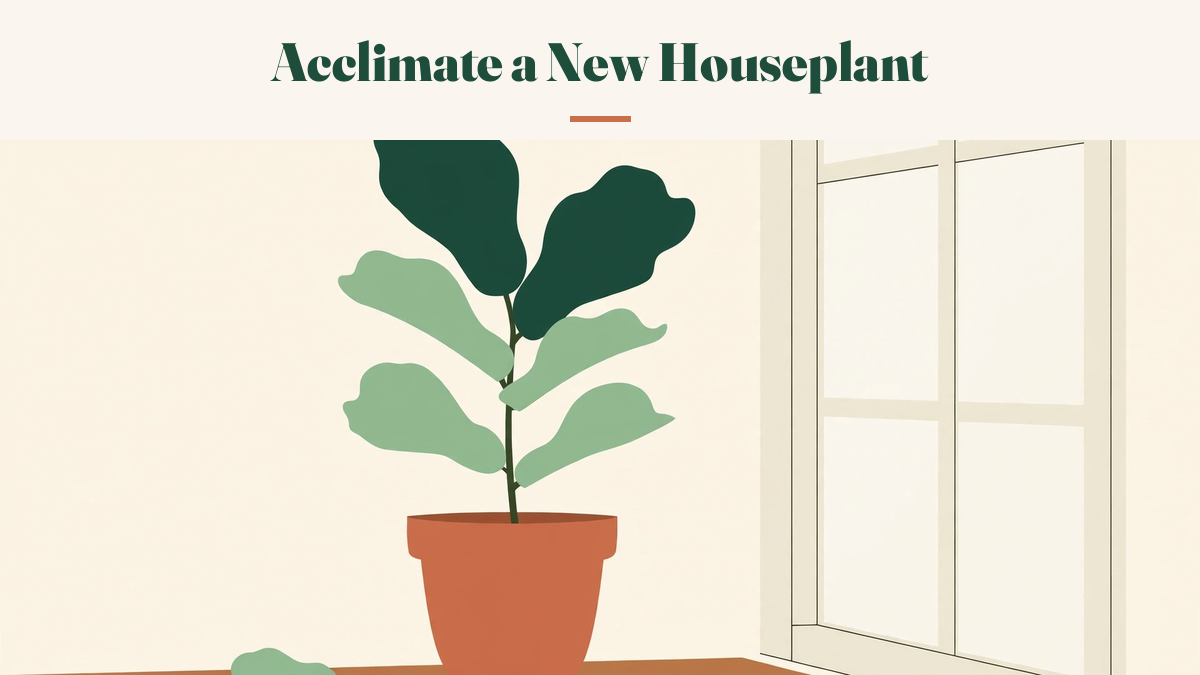
The fiddle-leaf fig I brought home one spring dropped eleven leaves in its first week. Eleven. I counted, because each one felt like a personal accusation. I'd done everything right — or so I thought. It was in a bright spot, I'd watered it, I hadn't repotted it. And still, every morning, another leaf on the floor.
What I didn't understand then is that the plant wasn't failing. It was adjusting. It had spent its life in a greenhouse — bright, humid, warm — and my living room was, by comparison, a dim, dry cave. The leaves it dropped were greenhouse leaves, grown for conditions that no longer existed.
That process has a name — acclimation — and almost every new houseplant goes through it. The difference between a plant that settles and a plant that spirals is usually what you do in the first two weeks.
Why new plants sulk
A houseplant from a shop or nursery has almost certainly been raised in a production greenhouse, where the conditions are close to ideal: strong, even light for long hours, humidity well above what any home reaches, steady warmth, and regular feeding. University of Tennessee Extension describes acclimatisation as the transition from those rapid growing conditions to the slower conditions indoors — lower light, lower humidity, and a lower need for water and nutrients.
Your home is a shock by comparison. Even a bright living room gets a fraction of greenhouse light, and winter heating drops humidity to levels a tropical plant has never experienced. The plant has also just been through transport — boxed, jostled, possibly chilled.
The plant's response is to shed the leaves it can no longer support. Washington State University's houseplant chapter puts it plainly: many new plants will lose a few lower leaves during adjustment, and this is a survival mechanism as the plant adjusts to its new surroundings. The plant is cutting its costs — fewer leaves means less water loss and less energy spent maintaining foliage it can't feed in the new light.
Some plants show it more than others. Fiddle-leaf figs are notorious for dramatic leaf drop, and weeping figs can drop half their leaves after a move. Pothos and snake plants barely notice.
The 14-day acclimation plan
This is the schedule I follow for every new plant. It's deliberately boring: the whole point is to change as little as possible, as slowly as possible, and let the plant do the adjusting.
| Days | What to do | What not to do |
|---|---|---|
| Day 1 | Inspect the plant thoroughly — leaf undersides, stem joints, soil surface. Put it in bright indirect light, away from direct sun and drafts. Water thoroughly if the soil is dry. | Don't repot. Don't fertilise. Don't put it in direct sun. |
| Days 2–3 | Leave it alone in its spot. Check the soil moisture with a finger. Note how the plant looks — take a photo for comparison later. | Don't move it to "try" different spots. Don't water on a schedule — check the soil first. |
| Days 4–7 | Begin a gentle light adjustment if its final spot is brighter: move it a little closer to the window. Start your normal watering rhythm based on soil checks. | Don't fertilise yet. Don't prune dropped leaves off aggressively — snip yellowed ones close to the stem if they bother you. |
| Days 8–10 | Inspect again for pests — this is when hitchhikers show up. If the plant is stable, you can start thinking about its permanent spot. | Don't introduce it to your other plants yet. Don't repot. |
| Days 11–14 | If it looks stable — no new leaf drop, no pests, soil drying at a normal pace — move it to its permanent spot and end quarantine. | Don't feed it yet. Wait until you see new growth, then start at half strength. |
The two rules that matter most are the two that feel wrong: don't repot, and don't fertilise. Washington State is explicit that you shouldn't do any major repotting until the plant has settled — repotting adds root damage on top of environmental stress, and a plant dealing with both at once often stalls for months. And fertiliser on a plant that isn't growing yet just accumulates as salts in the soil. Wait for new growth: that's the plant telling you it has settled, and that's when feeding helps.
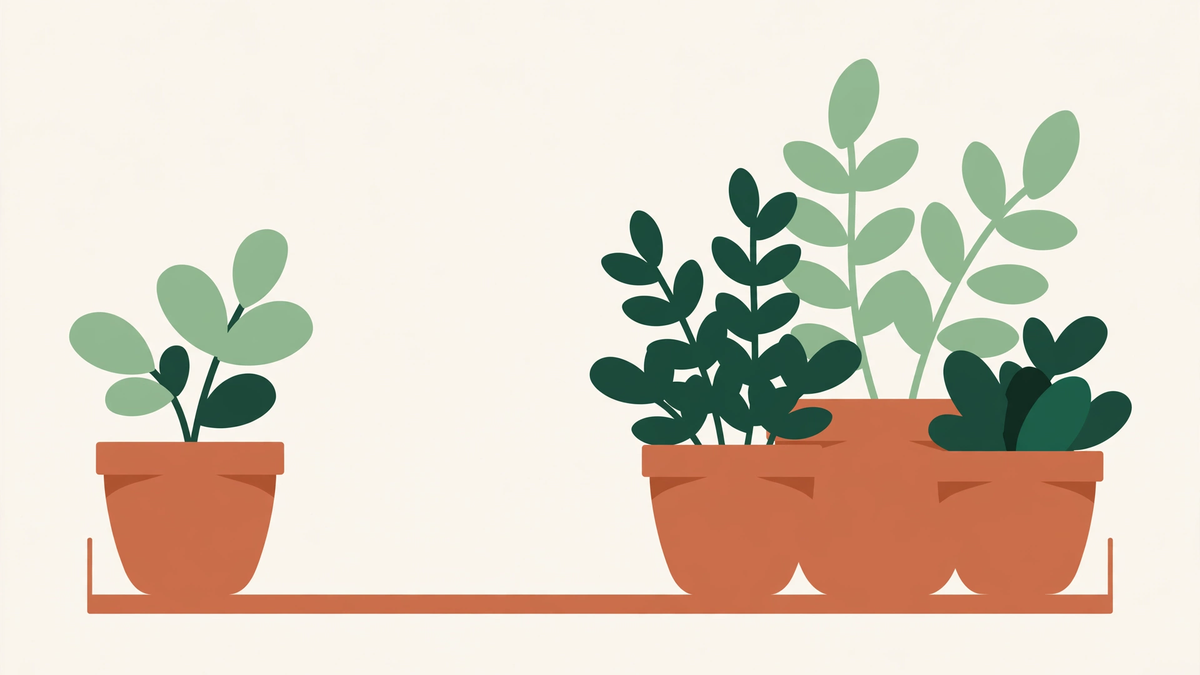
Quarantine: the step that protects everything else
Pests are the real reason. A new plant can carry spider mites, mealybugs, thrips, or scale — often in numbers too small to spot on a quick look in the shop. Two weeks of isolation gives them time to show themselves, where you can deal with one plant instead of twenty. I keep new plants in a spare room or a bathroom with decent light, on their own tray so runoff can't reach other pots.
During quarantine, inspect the plant every few days. Check the undersides of leaves, the joints where leaves meet stems, and the soil surface. Look for webbing, white cottony clusters, tiny moving dots, or sticky residue. If you find something, treat the one plant — don't wait and hope it goes away. The full quarantine protocol, including what to look for and how long to isolate different risks, is in how to quarantine a new plant.
The three things not to do
Don't repot on day one. This is the most common mistake, and I made it for years. The nursery pot looks cheap, the soil looks tired, and the urge to give the plant a "proper" home is strong. But repotting damages fine root hairs at exactly the moment the plant needs them most. Wait at least two weeks — a month is better — and repot only if the plant genuinely needs it: roots circling the pot, or water running straight through. The first 30 days with a new houseplant has a week-by-week checklist that includes when repotting is actually due.
Don't fertilise a settling plant. A plant that isn't growing doesn't need food, and fertiliser in the soil of a stressed plant can burn roots. I wait until I see the first new leaf — that's the signal the plant has adjusted and is ready to grow.
Don't keep moving it. Every new spot is a new light level, a new temperature, a new draft pattern. Pick the brightest indirect-light spot you have that isn't in direct sun, put the plant there, and leave it there for the full two weeks.
When leaf drop is normal — and when it isn't
Some leaf drop is expected, but there's a line between acclimation and a real problem. Here's how I tell them apart:
Normal acclimation: a few lower, older leaves yellow and drop over the first two to three weeks. The rest of the plant looks fine — stems are firm, the remaining leaves hold their colour, and the soil is drying at a normal pace. The dropping slows down and stops.
A real problem: leaves dropping from all over the plant, including new growth. Leaves going brown and crispy rather than yellow. Stems going soft. Soil that stays wet for weeks, or dries out in a day. The plant getting worse after week two instead of better. Any of these means something else is wrong — usually water, light, or pests — and it's worth working through the causes in why is my plant dropping leaves?.
One more thing worth knowing: winter arrivals have a harder time. A plant bought in December is adjusting at the worst possible moment — short days, dry heated air, cold windows. Give it extra time, keep it away from radiators and cold glass, and don't expect new growth until spring. Indoor plant care in winter covers the seasonal adjustments.
The fiddle-leaf that dropped eleven leaves? It sulked for a month, then put out three new leaves in spring, each one bigger than the last. The eleven leaves on the floor weren't a failure — they were the price of moving house. Your job is just to make the move as gentle as you can, and then get out of the way.
Frequently asked questions
How long does it take a houseplant to acclimate?
Most houseplants settle within two to four weeks. Some leaf drop in the first fortnight is normal — the plant is shedding leaves grown for greenhouse conditions and replacing them with leaves suited to your home.
Should I repot a new houseplant right away?
No. Wait until the plant has settled into your home, usually at least two weeks. Repotting adds root stress on top of the environmental change, and a stressed plant handles neither well.
Why is my new plant dropping leaves?
It is adjusting to lower light, lower humidity, and a different watering rhythm than the greenhouse it came from. A few lower leaves dropping in the first weeks is a normal survival mechanism, not a sign of failure.
Should I quarantine a new houseplant?
Yes — keep it away from your other plants for two to three weeks and inspect it regularly. Pests often arrive on new plants, and isolation is the simplest way to protect your collection.
Where should I put a new houseplant first?
In bright indirect light, away from direct sun, radiators, and cold drafts. Give it a stable spot and leave it there — moving it around the house while it adjusts only adds stress.
If you remember one thing… a new plant needs two quiet weeks, not a makeover — no repotting, no feeding, no moving, just bright indirect light and patience.