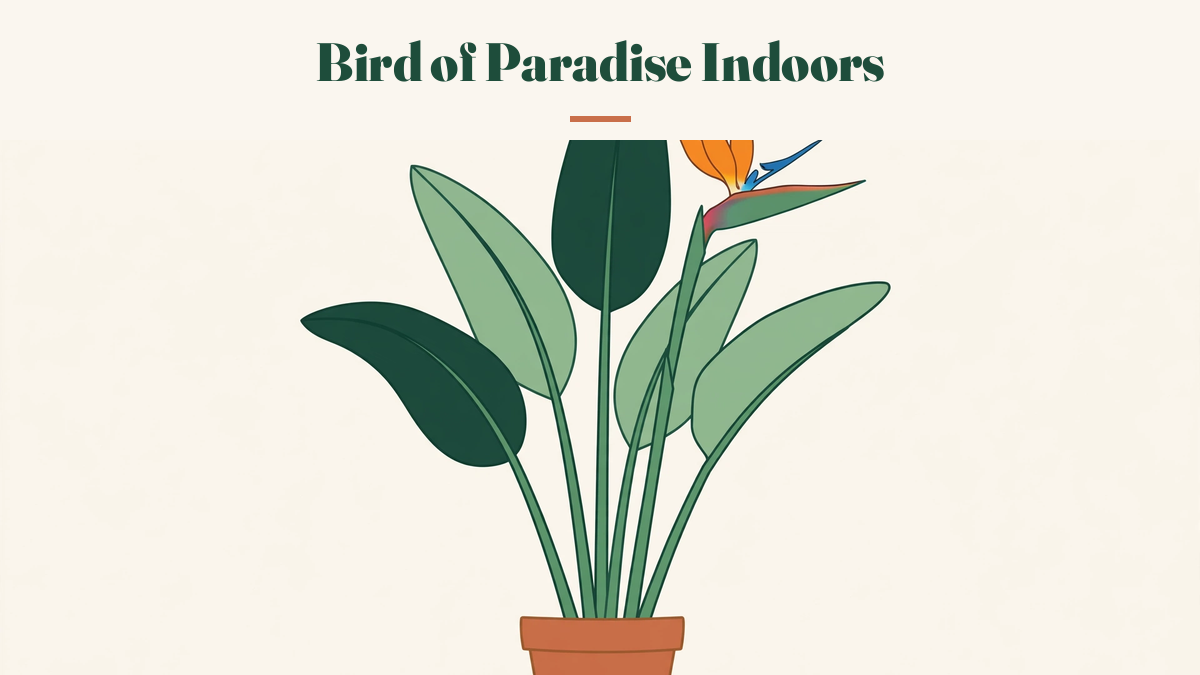
I bought my bird of paradise in a 12 cm pot, a small plant with four leaves that fitted on a windowsill. Three years later, it owns a corner of the living room. The pot is 30 cm wide, the leaves fan out over a metre across, and I have rearranged the furniture twice to give it more room. I love the plant — it is the most architectural thing I own — but I wish someone had told me on the day I bought it how much space it would eventually want.
That is the honest starting point for the bird of paradise (Strelitzia reginae): it is a superb indoor plant, and it is also a large one. It needs the brightest spot in your home, a big pot, and room to spread. If you can give it those three things, it will reward you with huge paddle-shaped leaves and, eventually, one of the most spectacular flowers in the houseplant world. If you cannot, it will survive — but it will not thrive, and it will not flower. This guide is about realistic expectations, because the gap between what this plant is sold as and what it becomes is wider than for almost any other houseplant.
Size first: how big it really gets
Let us get the numbers out of the way, because they decide whether this plant belongs in your home at all.
The RHS says strelitzias grow to at least 1.5 metres tall and 1 metre wide over time. North Carolina State puts the indoor size at roughly 3–4 feet in height and width. My own plant, after three years in a bright room, is about 1.4 metres tall and spreads about 1.1 metres across — and it is still growing. The plant grows as a clump from underground rhizomes, sending up new leaf stalks from the base each year, so it gets wider as well as taller. It does not grow as a single trunk you can prune back; it grows outward, and the only way to make it smaller is to divide the clump.
That is for Strelitzia reginae, the orange-flowered species that most shops sell. There is a second species you need to know about, because it is increasingly common in shops and it is much bigger:
| Species | Common name | Indoor size | Flowers | Best for |
|---|---|---|---|---|
| Strelitzia reginae | Bird of paradise | 1.5 m tall, 1 m wide | Orange and blue | Most homes with a bright corner |
| Strelitzia nicolai | White / giant bird of paradise | 2–3 m tall, 1.5 m+ wide | White and blue | Large rooms, conservatories only |
Strelitzia nicolai has banana-like leaves and a tree-like trunk, and it can reach the ceiling within a few years. It is a magnificent plant, but it is not a plant for a flat. If you buy a young bird of paradise and the label does not say which species it is, check the leaves: reginae has narrower, grey-green paddle leaves on long stalks, while nicolai has broader, banana-like leaves. When in doubt, ask the shop — the difference in eventual size is the difference between a corner plant and a room-dominating tree.
Before you buy, measure the spot. You need at least a square metre of floor space, a ceiling height that allows for 1.5 metres of growth plus the pot, and a window nearby. If you do not have that, a smaller statement plant — a monstera or a fiddle-leaf fig — will serve you better.
Light: the sunniest spot you have
Bird of paradise wants more light than almost any other houseplant I grow. The RHS says strelitzias need lots of bright light and are best positioned beside a large sunny window or in a conservatory. Clemson Extension allows a bright south window. In practice, the plant wants several hours of direct sun a day — a south- or west-facing window is ideal, and an east-facing window is the minimum.
This is the plant's make-or-break factor. In bright light, a bird of paradise grows vigorously, its leaves are thick and upright, and it builds up the energy to flower. In low light, it grows slowly, its leaves stretch toward the window and flop, and it will never flower. A bird of paradise in a dim corner is a plant slowly declining, and no amount of careful watering will fix a light problem.
One warning about moving it into the sun: a plant that has been growing in soft indoor light can scorch if you move it straight into direct sun. Acclimatise it gradually over two to three weeks, moving it closer to the window a little at a time. The leaves that grew in shade are thinner and more sensitive than the leaves that will grow in sun, and the plant needs time to produce sun-adapted growth. My guide on the best plants for a south-facing window covers which plants share this plant's appetite for sun.
Water and humidity: moist, not wet
Bird of paradise likes its soil moist during the growing season, but not saturated. The RHS recommends regular and plentiful watering in spring and summer, aiming to keep the compost constantly moist but not waterlogged. In practice, I water when the top 2–3 cm of soil feels dry, which for my plant in a 30 cm pot is roughly weekly in summer. The plant drinks a lot when it is growing — a large bird of paradise in a sunny room can take a litre of water at a time.
In autumn and winter, the rhythm changes. The RHS advises reducing watering from late November and letting the mix get fairly dry between waterings. I water roughly every two to three weeks in winter, and I always check the soil first — a plant in a cool room with short days uses very little water, and wet soil in winter is the fastest route to root rot.
Humidity matters, but less than people think. The RHS says strelitzias prefer a humid atmosphere and suggests misting the leaves or standing the pot in a tray of damp gravel. In my experience, average indoor humidity of 40–50% is fine for the plant's health — the leaves may develop slightly brown edges in very dry air, but the plant does not suffer the way a calathea does. If your home is very dry in winter, grouping the plant with others or using a pebble tray helps. A humidifier is not necessary for this plant alone.
Temperature is straightforward: strelitzias are tender tropical plants, and the RHS says temperatures should never go below 10–12°C. A normal heated home is fine. Keep the plant away from cold draughts — a spot next to a door that opens onto a cold hallway will cause leaf damage — and away from radiators, which dry the air and scorch the nearest leaves.
The splits are normal
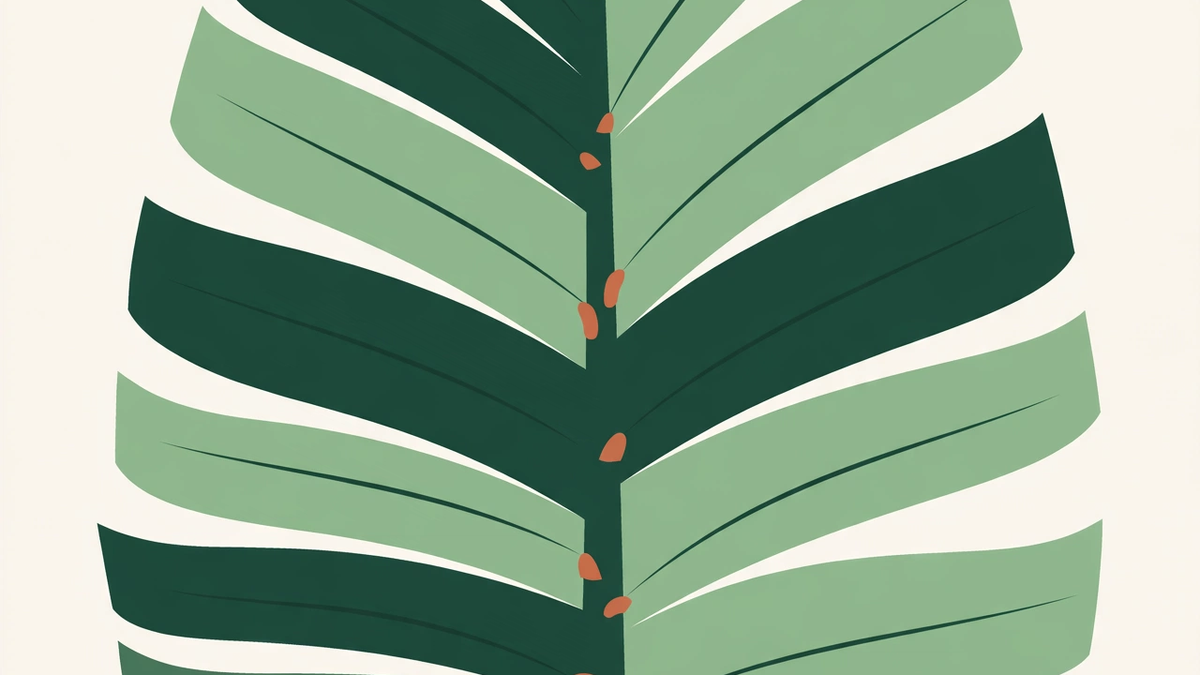
Every bird of paradise owner asks this question sooner or later: why are the leaves splitting? The large paddle leaves develop splits along their veins, sometimes several on a single leaf, and it looks like damage. It is not.
The splits are a natural adaptation. In the wild, in the coastal regions of South Africa, bird of paradise grows in exposed places where strong winds would tear a solid leaf to shreds. The leaves split along their veins instead, which lets the wind pass through without destroying the leaf. The plant is built to split, and a bird of paradise with split leaves is a healthy plant, not a damaged one.
Indoors, the splits appear for a different reason: the leaves are large and heavy, and they split under their own weight as they unfurl, or when they brush against furniture, walls, or each other. A plant in a tight spot, where the leaves rub against a wall every time someone walks past, will split more than a plant with room to spread. Giving the plant space reduces the splitting, but it will not eliminate it — some splits are inevitable, and they are part of how the plant looks.
Do not cut off split leaves. A split leaf is still photosynthesising and still contributing to the plant. Remove a leaf only when it has turned mostly brown or yellow, cutting the stalk at the base. A bird of paradise with a few split leaves and a full, healthy crown looks better than a plant that has been stripped of every imperfect leaf.
Feeding and repotting: a hungry plant
Bird of paradise is a hungry plant. The RHS calls them hungry plants and recommends a liquid houseplant feed fortnightly during the growing season, through spring and summer. That is more often than most houseplants need, and it reflects how fast the plant grows when it has the light and water it wants. I feed mine every two weeks from March to September with a balanced liquid fertiliser at half strength, and I skip feeding entirely in winter.
The soil should be fertile and well-draining. The RHS suggests a peat-free loam-based compost, such as John Innes No. 3, with added grit for drainage. I use a mix of houseplant compost, loam, and perlite, which holds enough moisture for the plant's needs while draining freely. Drainage holes are essential — a bird of paradise in a pot without them will rot.
Repotting is a spring job, but it is less frequent than for most plants, because bird of paradise flowers better when it is slightly pot-bound. The RHS and most growers agree: a plant that has filled its pot is more likely to flower than one with room to spare. I repot mine every two to three years, going up one pot size, and in the years between I top-dress — scraping off the top few centimetres of soil and replacing it with fresh compost. If your plant is growing well and the soil dries out within a few days of watering, it is time to repot. If it is growing well and the soil stays moist for a week, leave it alone. My guide on the right pot size for houseplants covers the sizing judgement in more detail.
You can also divide a large bird of paradise at repotting time. The clump separates into sections, each with its own rhizome and leaves, and each section can be potted up on its own. Division is the most reliable way to propagate the plant, and it is also the only way to reduce the size of a plant that has outgrown its space.
Will it flower indoors?
This is the question everyone asks, and the honest answer is: possibly, but not soon, and not without the right conditions.
The RHS says plants usually need to be a substantial size, and five to ten years old, before they flower. That is the timeline to work with. A bird of paradise bought as a young plant will not flower in its first few years, however good the care. The plant needs to reach maturity, and maturity takes time — five years at the earliest, more commonly seven to ten.
When it does flower, the bloom is extraordinary: a stiff, beak-like spathe in orange and blue, shaped like a bird's head, that opens to reveal the flowers. It is one of the most recognisable flowers in the world, and it is worth the wait.
Three things increase your chances. First, light: the plant needs very bright light, ideally several hours of direct sun, to build up the energy to flower. A plant in a bright conservatory will flower sooner than a plant in a north-facing room. Second, maturity: the plant needs to be a substantial size, with multiple leaf stalks and a well-developed rhizome. Third, pot-bound roots: a slightly pot-bound plant flowers better than one with room to spare, so resist the urge to repot into a much larger pot.
If your plant is young, or in less than ideal light, set the flowering question aside and enjoy the foliage. The leaves alone justify the plant — and if it flowers in five years' time, it will be a bonus, not a disappointment deferred.
Troubleshooting: what to check first
| Symptom | Most likely cause | What to do |
|---|---|---|
| Leaves curling inward | Underwatering or cold draught | Check soil moisture; move away from cold windows and doors |
| Brown, crispy leaf edges | Low humidity or underwatering | Water more consistently; move away from radiators |
| Yellow leaves, lowest first | Normal ageing (one or two) or overwatering (several) | If only the oldest leaves, ignore it; if several, let the soil dry out |
| No new growth all summer | Not enough light, or needs feeding | Move to a brighter spot; feed fortnightly in the growing season |
| Leaves leaning toward the window | Not enough light | Move closer to the window; rotate the pot regularly |
| Brown spots on leaves | Sunburn (after a sudden move) or cold damage | Acclimatise gradually to sun; keep above 10°C |
| Soil staying wet for weeks | Pot too big, or drainage blocked | Check drainage holes; repot into a smaller pot if needed |
If you love the big-leaf look and want to build a whole room around it, my guide on how to create an indoor jungle covers how to group large plants without overwhelming your home.
Frequently asked questions
How big does a bird of paradise get indoors?
Strelitzia reginae reaches at least 1.5 m tall and 1 m wide indoors. Strelitzia nicolai grows much larger — up to 3 m or more — and suits only big rooms.
Why are my bird of paradise leaves splitting?
Splitting is normal. The leaves split along their veins, which in the wild lets strong winds pass through rather than tearing the leaf. Split leaves are healthy leaves.
Will my bird of paradise flower indoors?
Possibly, but it takes patience — plants usually need to be 5–10 years old and a substantial size, with very bright light. Slightly pot-bound plants flower better.
How much light does a bird of paradise need?
As much as you can give it. A large sunny window or conservatory is ideal — several hours of direct sun a day. In low light it grows slowly and rarely flowers.
Is bird of paradise safe for cats and dogs?
No — the ASPCA lists Strelitzia reginae as toxic to dogs, cats, and horses, mainly from the fruit and seeds. Keep it out of reach. Pet-safe lists are guidance — check with a vet for your animal.
If you remember one thing… a bird of paradise needs the sunniest spot you have and a square metre of floor — give it those, and it will spend a decade becoming the best-looking plant in your home.